Atheist ?

Atheist ?

I too would be an atheist—if it weren’t for all the evidence for God.

I’m bothered by the suffering in our world. When pain, frustration, and death are on every side, and we cry out to God but He seems silent, it can cause me to question my faith.

And then I lay on the ground and stare at the sky on a clear night. I gaze and I muse at the universe.

Every explanation for the beauty of our universe falls flat compared to the creation of an awesome God.

I’ve witnessed the birth of my children, and the birth of countless animals—and I’m amazed beyond words at the intricacy and wonder of that child. No “scientific” explanation can even begin to satisfy my soul.

So I have concluded, to the satisfaction of both my heart and my mind, that there must be a Creator God. And if, in fact, there is a Creator God—then who am I?

I have no choice but to fall on my face and worship Him who chose to make me a part of this awesome creation.

And if I’m a part of this world, then I’m a part of the beauty and the pain; I’m a part of the life and the death; I’m a part of the love and the hate.

So I cry out to God—and He speaks to my heart.

Even without the Bible, even without the knowledge of Jesus, I would worship an awesome and holy God.

Now, if my soul cries out in worship, then it becomes prudent for me to know what He wants of me.

Since the beginning of time—since the day of creation—mankind has searched for God. And God has lived among us.

Others have written about it. Others have witnessed His glory. Others have seen His face.

And from those words, I hold in my hand the Bible.

Those stories, those words, those truths, those relationships—they have inspired me to worship Jesus.

Faith Under Fire

Faith Under Fire

Faith Under Fire: The Courage to Endure

There’s a kind of strength that doesn’t shout. It doesn’t march into battle with a sword or a speech. It endures quietly, faithfully, day after day, under pressure most of us will never understand. This is the strength of endurance—the godly courage to stand firm in the face of fear, suffering, and injustice, and to keep holding on when everything in you wants to give up.

Endurance is a character trait we don’t celebrate enough. In a world that praises loud victories and instant success, we sometimes forget the quiet heroes who simply refuse to bend. But God sees them. And He calls us to be like them.

I remember meeting Richard Wurmbrand many years ago. He wasn’t a large man, and he didn’t need to be. His presence carried a gravity that didn’t come from physical size—it came from the fire he had walked through and the faith that had come out shining.

Richard was a pastor in Communist Romania, arrested and imprisoned for simply preaching the Gospel. He spent fourteen years in prison, much of it in solitary confinement, enduring beatings, starvation, and torture. He was offered freedom many times—if only he would betray his fellow believers or deny Christ. He never did.

He told stories of singing in the darkness. Of being beaten and then praying for his captors. Of sharing communion in a prison cell using crusts of bread and drops of water. His body bore the marks of that suffering, but his spirit radiated joy and peace.

That’s the kind of manhood we need to talk about. That’s godly courage—not the kind that gets headlines, but the kind that moves heaven.

And as we come into Easter week, we remember the One who endured it all for us. Jesus didn’t just die for us—He endured for us. He walked willingly toward the cross, knowing the pain, betrayal, humiliation, and death that waited for Him. And He did it out of love.

Richard Wurmbrand followed in that same spirit. He didn’t try to be a hero. He just held on to Jesus. He stayed faithful when it hurt. And that’s the call on all of us—to stay faithful, to endure, to trust that God is with us in the fire.

Scripture:
“Blessed is the man who remains steadfast under trial, for when he has stood the test he will receive the crown of life, which God has promised to those who love him.”
—James 1:12

Challenge:
When pressure comes, when people mock you, when life gets hard—do you quit, or do you stand? Can you endure, not just once, but again and again, because your eyes are fixed on Jesus? Real courage isn’t flashy. It’s faithful. And it shines brightest in the dark. This Easter, don’t just remember Christ’s victory—remember His endurance. And ask yourself: will I have the courage to do the same?

Judas Ate Too

Judas Ate Too

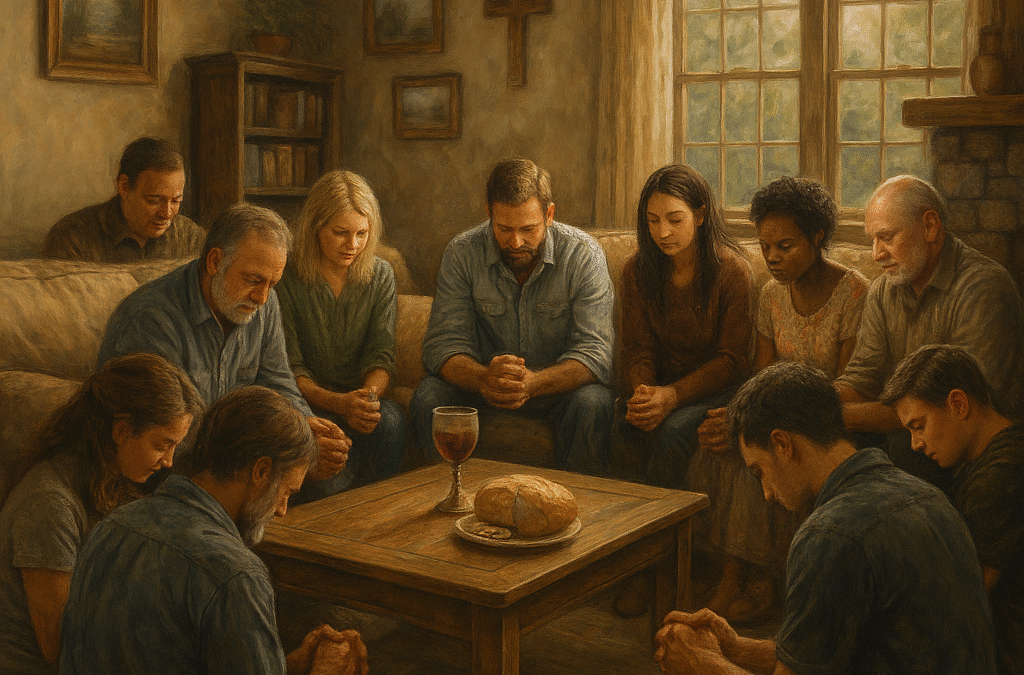
Hours before Jesus went to the cross, He sat at a table with His disciples. Bread was broken. Wine was shared. And Judas… ate too.

That line hits me every time I hear it.

Judas ate too.

But before we go any further, let’s talk about who Judas was.

Judas Iscariot was one of the twelve disciples—part of Jesus’ inner circle. He walked with Jesus. Ate with Him. Saw miracles firsthand. He was trusted enough to carry the group’s money. But despite all that, Judas chose to betray Jesus.

For thirty silver coins—the price of a slave—he sold Jesus out. He led soldiers to Jesus in the dark of night, identified Him with a kiss, and handed Him over to be arrested. That betrayal set the wheels in motion that would lead to Jesus’ torture and death on a Roman cross.

And Jesus knew it.
He knew what Judas was about to do.
And still… Judas ate too.

Jesus didn’t exclude him.
Jesus didn’t skip over him.
Jesus didn’t expose him in front of everyone.
No, Jesus fed Judas.
Jesus washed Judas’ feet.
Jesus loved Judas.

And I just can’t get over that.

What kind of love is this?

A love that kneels before betrayal.
A love that feeds the mouth that will speak poison.
A love that touches the feet that will walk away into darkness.
A love that forgives even before the knife goes in.

I try to imagine that moment. Jesus, fully aware of what Judas is about to do, still chooses love. No bitterness. No resistance. Just love.

And then it hits me.

I’m Judas too.

I’ve betrayed trust.
I’ve chosen selfishness.
I’ve turned my back, gone my own way, and let my pride win far too often.
And yet, Jesus still invites me to the table.
Still feeds me.
Still loves me.

That realization undoes me.

I think about the people in my life who are hard to love. The ones who’ve betrayed me. The ones who’ve lied, gossiped, hurt, or disappointed me. And I think: what if following Jesus means learning to love them too?

It’s easy to love Jesus.
It’s easy to love the grateful, the kind, the ones who love us back.
But Jesus calls us to more.

He calls us to love Judas.

To love when it’s undeserved.
To serve when it’s uncomfortable.
To forgive when it feels impossible.

That’s the heart of the Gospel.
Not just receiving grace, but extending it.
Not just worshiping Jesus, but walking like Him.

So today, when you sit at your own table—whether in your home, your job, your church, or your heart—look around.

Who’s your Judas?

Maybe it’s someone you’ve tried to forget.
Maybe it’s someone you’ve kept at arm’s length.
Maybe, like me, sometimes it’s you.

But here’s the good news:
Jesus still invites you to the table.
And He invites them too.

Let’s be the kind of people who don’t just love the lovable—but love like Jesus.

Even if it means setting a place for Judas.

Wild Courage: The Strength to Stand Out

Wild Courage: The Strength to Stand Out

In a world that pressures young men to play it safe, fit in, and never ruffle feathers, there is a desperate need for boldness—not recklessness, but godly courage. The kind of courage that doesn’t just survive the battle but charges into it with purpose, conviction, and faith. God didn’t call us to be timid. He calls us to be strong and courageous. Not in our own strength, but in His.

Godly men aren’t always the quiet ones in the back row. Sometimes, they’re the warriors on the front lines, making choices that look crazy to the world but are born out of a fierce devotion to what’s right. There’s a boldness that comes from knowing you were made for something greater, something eternal. That kind of man stands out—and sometimes stands alone.

Jack Churchill, known as “Mad Jack,” lived that kind of boldness. During World War II, when nearly every soldier marched to the rhythm of modern warfare, Jack Churchill showed up with a longbow, a Scottish broadsword, and a heart full of fire. He believed that “any officer who goes into action without his sword is improperly dressed.”

It wasn’t just for show. He fought with those weapons—and won. He led dangerous missions, captured enemy troops, and did it all with a style that seemed almost reckless to his peers. But underneath the wild exterior was a man of conviction. A man unafraid to stand out. A man who believed in something bigger than himself.

Jack Churchill reminds us that courage doesn’t always look like what the world expects. Sometimes it looks like stepping onto the battlefield with faith instead of fear, even if you’re carrying a sword instead of a gun. Like Gideon leading 300 men with torches and trumpets, or Joshua marching around Jericho, Jack Churchill fought in ways that didn’t make sense—except through the lens of bold faith.

Godly courage isn’t always about the weapons you carry; it’s about the heart behind them. It’s the willingness to face overwhelming odds with confidence because you trust the One who called you to stand. It’s the strength to step forward when everyone else holds back.

Scripture:
“Be strong and very courageous. Be careful to obey all the law my servant Moses gave you; do not turn from it to the right or to the left, that you may be successful wherever you go.”
—Joshua 1:7

Challenge:
Are you bold enough to stand out—to fight for what’s right even when it looks foolish to others? Would you walk into the fire with nothing but faith and a sword if that’s where God called you? Because real courage isn’t loud or showy—it’s rooted in obedience, fueled by purpose, and proven in the heat of battle. Stand firm. Be bold. And never mistake being different for being wrong.

When Love Costs You Something

When Love Costs You Something

“Greater love has no one than this: to lay down one’s life for one’s friends.” – John 15:13

Love is beautiful, but it isn’t cheap.

We often talk about love as a feeling—warm, affirming, sweet. And it is all of those things. But real love—the kind that reflects the heart of God—will cost us something. Sometimes it costs time. Sometimes it costs comfort. Sometimes it costs our pride or convenience or control.

Love means forgiving when we’d rather hold onto the hurt. It means showing up when it’s inconvenient. It means listening when we’re tired, and choosing patience when frustration comes easy.

But here’s the truth: that kind of love changes us. It draws us closer to the people we love. It creates bonds that go beyond surface-level affection. The more we invest, the deeper we grow—not just in relationship with others, but in maturity, in grace, and in our likeness to Jesus.

Think of Ruth.

When her husband died, Ruth could have returned home to her own people and rebuilt her life. But love compelled her to stay with Naomi—an aging, grieving mother-in-law with no resources and little hope. Ruth’s words are unforgettable: “Where you go, I will go. Where you stay, I will stay.” That kind of love—costly, loyal, and sacrificial—brought restoration not only to Naomi, but also to Ruth herself. Her love planted the seeds of redemption, leading to an entirely new future neither of them could have imagined.

And it goes both ways.

Being loved also costs something. It means letting people in. It means receiving, even when we’d rather be strong and independent. It means admitting we have needs, trusting someone else enough to see us vulnerable. It means letting others sacrifice for us—and realizing we’re worth it to them.

That’s not always easy.

But when someone chooses to love you—when they invest time, effort, and sacrifice into your life—it is a sacred thing. Their love is a gift that reshapes the soul. It’s humbling. It’s healing. And it reminds us that we were never meant to walk this life alone.

This week, before we arrive at the cross, take time to notice the ordinary sacrifices of love—both given and received. Let the small, costly choices to love be acts of worship. And let the love others show you be a reminder of your value, not just to them—but to God Himself.

Because next week, we will see just how far He was willing to go to show it.