When we open the Bible, the very first words we encounter are:
In the beginning, God created the heavens and the earth. — Genesis 1:1
These aren’t just the first words of Scripture. They are the foundation of everything.
Before galaxies spun into motion… Before breath ever filled human lungs… Before time had a name… God is.
He is the Eternal One—uncreated, unshaken, ever-present. And that changes everything.
A Different Kind of Foundation
In a world that explains existence with chaos or coincidence, we quietly but confidently anchor our lives in the opening breath of Scripture:
In the beginning, God.
He wasn’t made. He didn’t appear. He is the One who made it all.
And this God is not just a distant force. He is a Person. A Father. A Creator. The One who speaks… and light obeys.
Before the mountains were born, or You brought forth the whole world, from everlasting to everlasting—You are God. — Psalm 90:2
The God Who Is
When God told Moses, “I AM,” He revealed something our minds can barely contain:
He does not become. He does not fade. He simply is.
That means He’s not only part of the past. He’s not just waiting somewhere in the future. He is fully present—right now. And more than that, He is with us.
Jesus Christ is the same yesterday and today and forever. — Hebrews 13:8
When Life Trembles
So when everything around you shifts or shakes… When life feels uncertain or heavy…
Remember: God remains. Unmoved. Steady. Faithful.
This is the heart of our hope.
Whether you’re facing a new beginning or walking through an ending— Whether you’re searching for direction or simply trying to hold on— You are not alone.
Anchored in His Presence
The same God who is at the beginning… is here now. And He is not leaving.
We may not understand it all. But we don’t have to. Because we know the One who holds it all.
And that… is enough.
🙏 Pause & Reflect
What would change if you truly believed: God is.
Not just was for Abraham. Not just will be someday. But is—with you, right now.
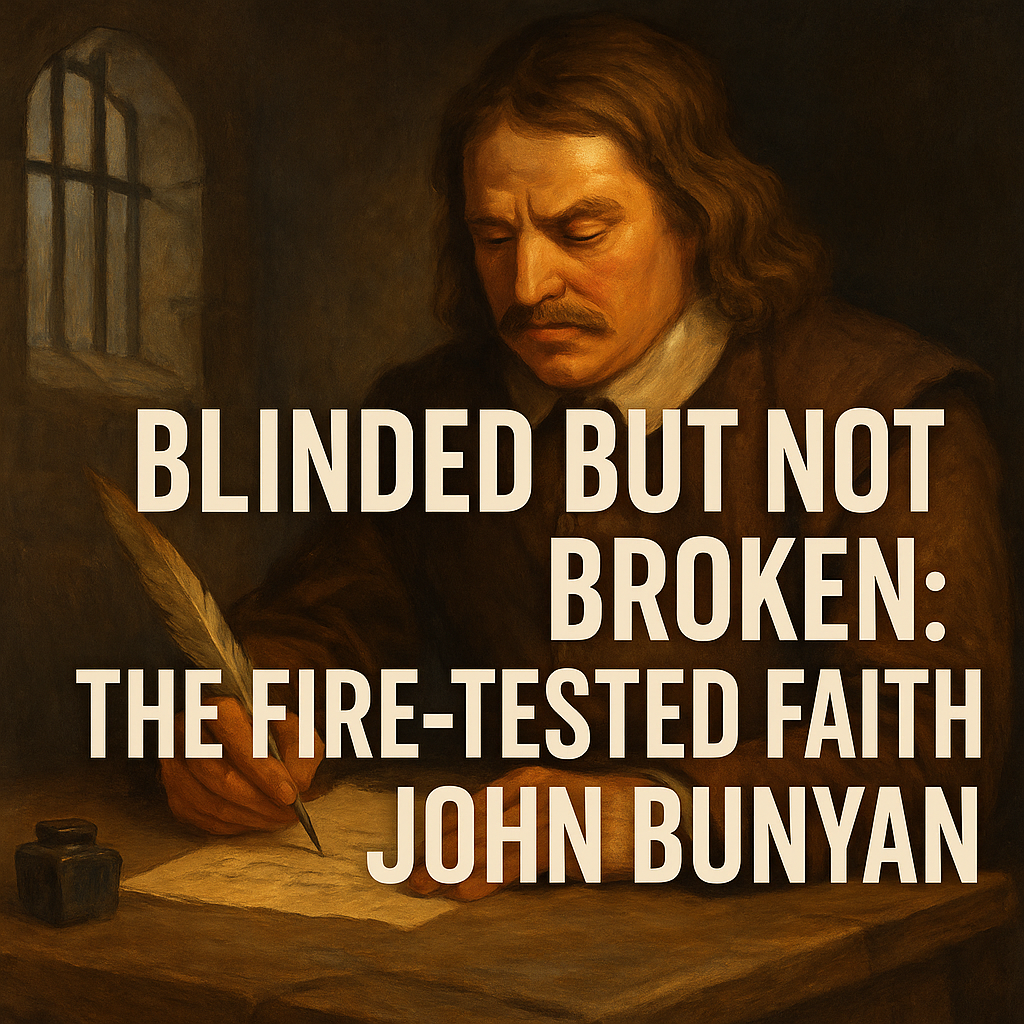
Blinded But Not Broken: The Fire-Tested Faith of John Bunyan
He spent twelve years in a cold, dark prison—not for violence, not for theft, but for preaching without permission. He could’ve walked out any day… if he’d just keep quiet. But John Bunyan refused.
John Bunyan wasn’t raised in royalty or trained in theology. He was a tinker—a poor tradesman—and a wild young man, known for his foul mouth and reckless ways. But when Jesus Christ got hold of his heart, everything changed.
Bunyan began preaching, not with polish or pedigree, but with a burning conviction. People gathered to listen. Lives were changed. And that drew the attention of the authorities.
In 1660, under laws that banned unlicensed preaching, John was arrested. The judge offered him freedom—on one condition: Stop preaching.
His reply? “If you let me out today, I will preach again tomorrow.”
So they locked him up.
His wife was at home, nearly destitute. His young daughter was blind. His church had no shepherd. But still—he stayed. Why? Because he feared God more than man.
Inside that tiny prison cell, John began to write. With a piece of paper and a heart full of fire, he penned the most influential Christian allegory ever written: The Pilgrim’s Progress.
It wasn’t a sermon. It was a story.
A story about a man named Christian… walking a narrow path toward the Celestial City. Facing dragons, mockers, swamps, and cages. A journey of danger, courage, doubt, and deliverance.
That book—born in chains—has never gone out of print.
John Bunyan didn’t fight with sword or shield, but his pen cut deep. His life was forged in the fire of suffering—and what came out was pure, unshakable faith.
He could have chosen comfort. He chose obedience. He could have stayed silent. He chose to speak.
“But even if you should suffer for what is right, you are blessed. Do not fear their threats; do not be frightened.” —1 Peter 3:14
Your Turn
What truth are you afraid to speak? What fire are you being asked to walk through?
You don’t need a stage or a pulpit. You need conviction. Take the next step. Say the hard thing. Write the bold word. Live the true life.
Let your faith speak—even if the world tries to silence it.
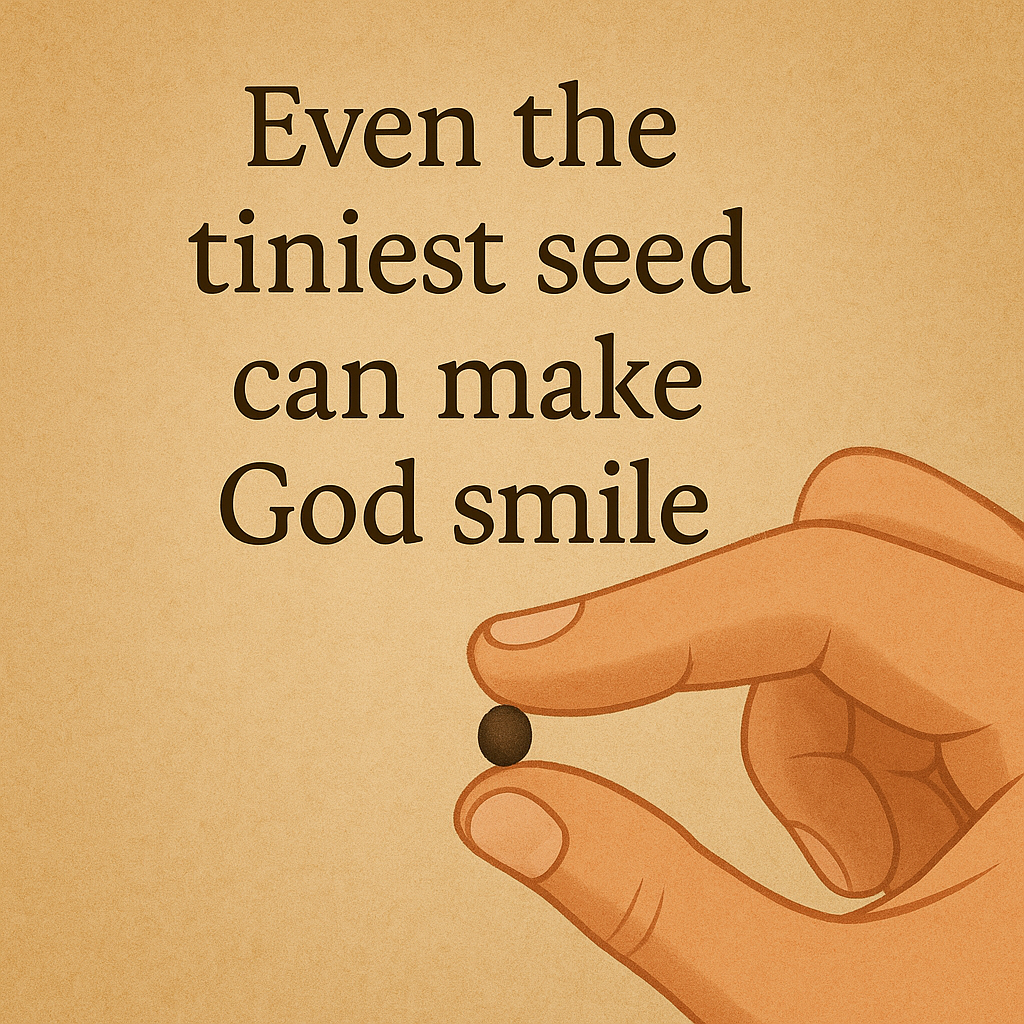
Some days, faith feels like holding a tiny seed in a storm.
It’s not loud. It’s not strong. It’s not even steady. It’s just there—small, quiet, trembling.
But Jesus said even that is enough.
“If you have faith as small as a mustard seed…” —Luke 17:6
He didn’t ask us to be giants. He didn’t ask us to never struggle. He just asked us to trust Him—even when it’s small.
The Bible says:
“It is impossible to please God without faith. Anyone who wants to come to him must believe that God exists and that He rewards those who sincerely seek Him.” —Hebrews 11:6 (NLT)
God isn’t just watching to see if we pass or fail. He’s watching because our faith pleases Him. He delights when we come to Him—even with shaky hands and tearful eyes.
Peter says it like this:
“These trials will show that your faith is genuine. It is being tested as fire tests and purifies gold… your faith is far more precious than gold.” —1 Peter 1:7
Did you catch that?
Your faith is precious.
Even tested faith. Even tired faith. Even just-barely-holding-on faith.
And when you keep trusting through the hard parts—God smiles.
Not because you’re strong. But because you didn’t give up.
Not because you had answers. But because you stayed close.
That’s what faith looks like. That’s what pleases His heart.
So if your faith feels small today, don’t be ashamed. Plant it. Water it with prayer. Let it grow in the quiet, the dark, and the hard.
Because God is not far. He is near—closer than the breath you just took. And He treasures every tiny seed that dares to believe.
Reflection Question: What does your mustard seed look like today? Even if it’s small, bring it to Him.
“I am worn out from my groaning. All night long I flood my bed with weeping and drench my couch with tears.” —Psalm 6:6 (NIV)
[ From: 2 Samuel, especially chapters 13 through 19 ]
He was a man after God’s heart. But tonight, David couldn’t even feel his own heart.
He lay awake in the shadows of his palace—once filled with music, now echoing with silence. His son, Absalom, had turned against him. The people he led had followed the rebellion. Trusted advisors had become traitors. The throne felt cold beneath him.
But the worst of it wasn’t the betrayal. It was the silence.
No word from the prophet. No whisper in the night. No fire from heaven or still small voice. Only the deafening quiet of a God who had once spoken so clearly—and now did not.
David had known the touch of the Spirit. He had danced with joy before the ark of the covenant. He had walked into battle with nothing but a sling and a song. He had heard God call him from the fields, guide him through caves, convict him in secret.
But this was different.
This was grief that had settled into his bones. Regret that replayed like a slow, burning fire. And a question that kept haunting him: Is this my fault?
He remembered the rooftop. The woman. The lie. The death. The choices that led to all this. Maybe I deserved this. Maybe God had finally had enough. Maybe the silence was the answer.
And still, he prayed.
Not with power. Not with confidence. But with cracked lips and tear-stained cheeks. He prayed because he had nowhere else to go.
He wept until the sheets were soaked. Until the psalms inside him felt more like sobs. Until faith stopped being a feeling—and became a decision.
He reached—not up, but inward. To that place where real faith is born.
Not the kind that wins battles. The kind that survives heartbreak.
Not the kind you post on a wall. The kind you whisper through clenched teeth at 3 a.m.
The kind of faith that says: “Even if You slay me, my hope remains in You.”
That’s not theology. That’s desperation clinging to a thread of hope.
David didn’t understand God in that moment. But he knew Him.
And sometimes, that is the only rest you get—not understanding, not relief, but knowing. Knowing that the God who was with you in the light is still God in the dark. Even when silent. Even when it hurts.
So David kept writing. Kept singing. Kept believing.
Not because life was okay. But because God was still God.
He was all David had left. And somehow, that was enough.
You may not be a king with a crumbling kingdom, but maybe your world feels just as broken. A child has walked away. A diagnosis has shattered your plans. A prayer has gone unanswered. And like David, you’re lying awake, asking if God still sees you.
Reflection Question
What do you do when God is silent, and your pain feels louder than His promises?
Prayer
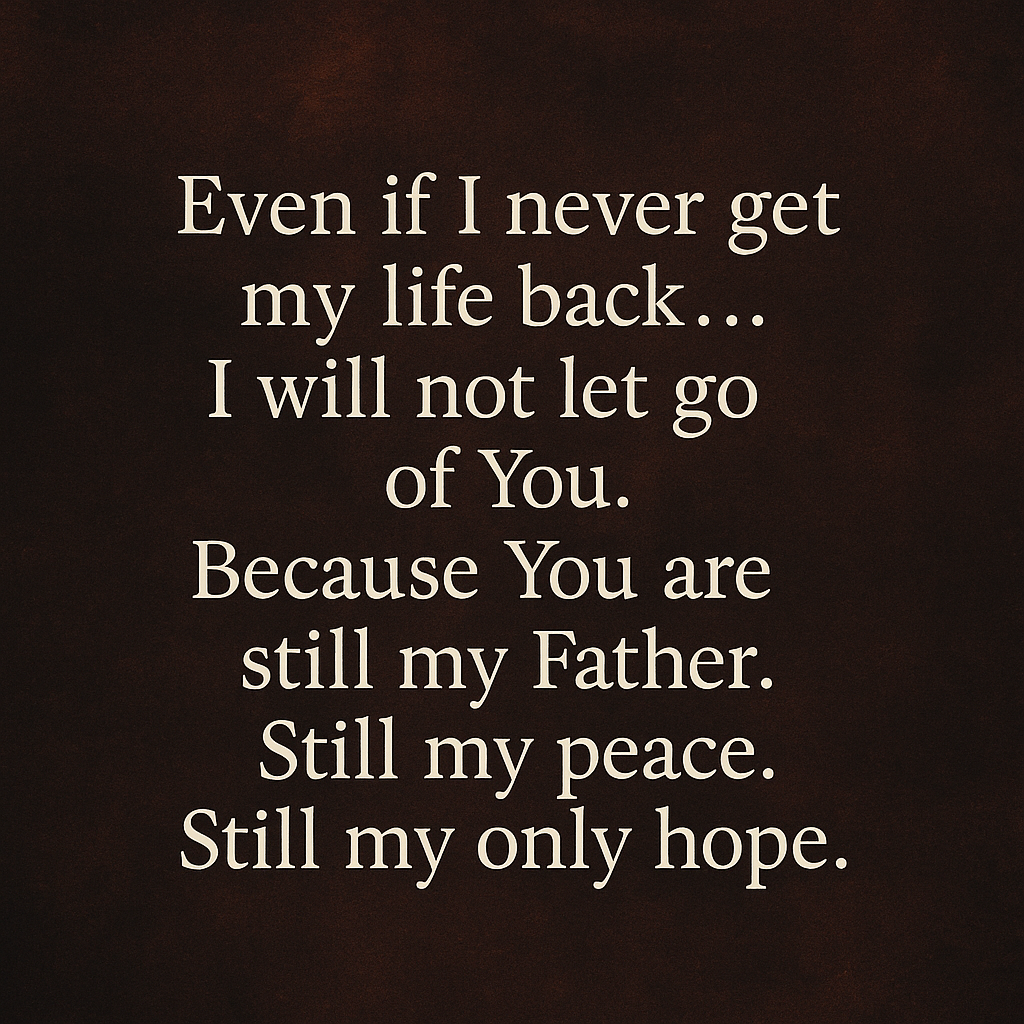
Father, when the grief is too deep and the silence too long, don’t let me walk away. Teach me to dig deep. To hold on, not because I understand, but because I know You. You are my Father. You are my peace. You are all I have—and that is enough.
“Let us not grow weary of doing good, for in due season we will reap, if we do not give up.” —Galatians 6:9
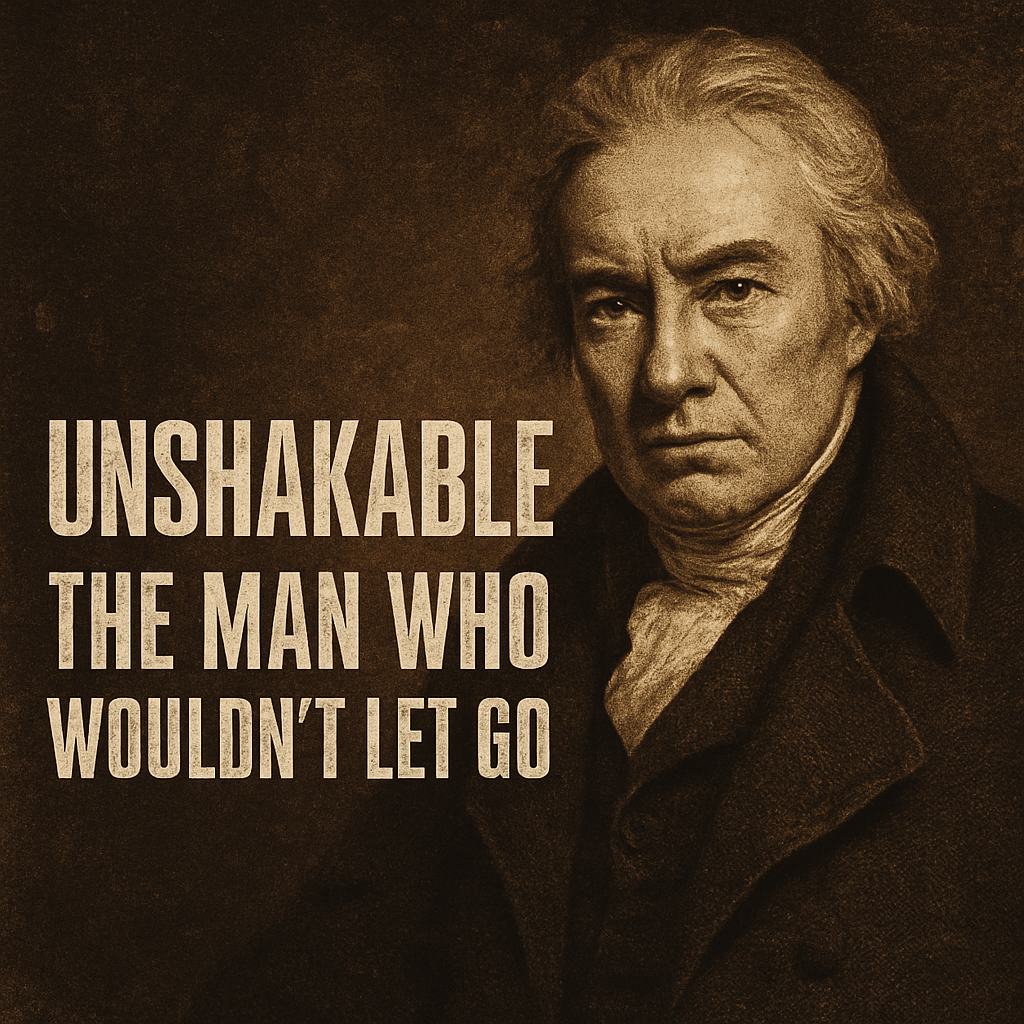
There are men who fight for a moment—and then there are those who fight for a lifetime.
William Wilberforce didn’t just take a stand. He planted his feet, clenched his jaw, and stood there for decades, while the world around him screamed to give up.
He was born into wealth. He could’ve coasted through life on comfort and applause. But he met Jesus—and Jesus wrecked his plans.
That’s where the fire started.
Because when Christ gets hold of a man, He doesn’t just pat him on the back and say, “Be nice.” He gives him a burden. A cause. A calling that keeps him up at night and stirs him to act when no one else will.
Wilberforce’s burden? Freedom.
Slavery was the backbone of the British economy, and everyone knew it—even the church turned a blind eye. But Wilberforce saw it for what it was: wickedness. Dehumanizing. Evil.
And he would not shut up about it.
The man spent over twenty years—twenty years!—dragging bill after bill into Parliament, only to be laughed at, rejected, or outvoted. Again and again.
They mocked him. They ridiculed him. Friends betrayed him. His health broke down.
At one point, he was so sick and discouraged, he almost quit.
But he didn’t.
Because he was forged—not in applause or approval—but in fire. And when God forges a man in fire, He burns away the comfort, the cowardice, and the craving to be liked.
What’s left is steel.
Wilberforce’s steel didn’t come from arrogance—it came from conviction. A deep-rooted belief that God’s justice was worth the fight, no matter how long it took, no matter what it cost.
And in the end?
After decades of being a joke… the Parliament passed the bill. The slave trade was outlawed.
Three days later, William Wilberforce died.
He lived just long enough to see the chains start to break.
Forged Reflection
God doesn’t need men who fight for applause. He’s looking for men who don’t let go. Men who fight the long, thankless battles. Men who wear themselves out doing good.
That’s how kingdoms shift. That’s how history bends. That’s how you become unshakable.
“Let us not grow weary of doing good, for in due season we will reap, if we do not give up.” —Galatians 6:9 (WEB)