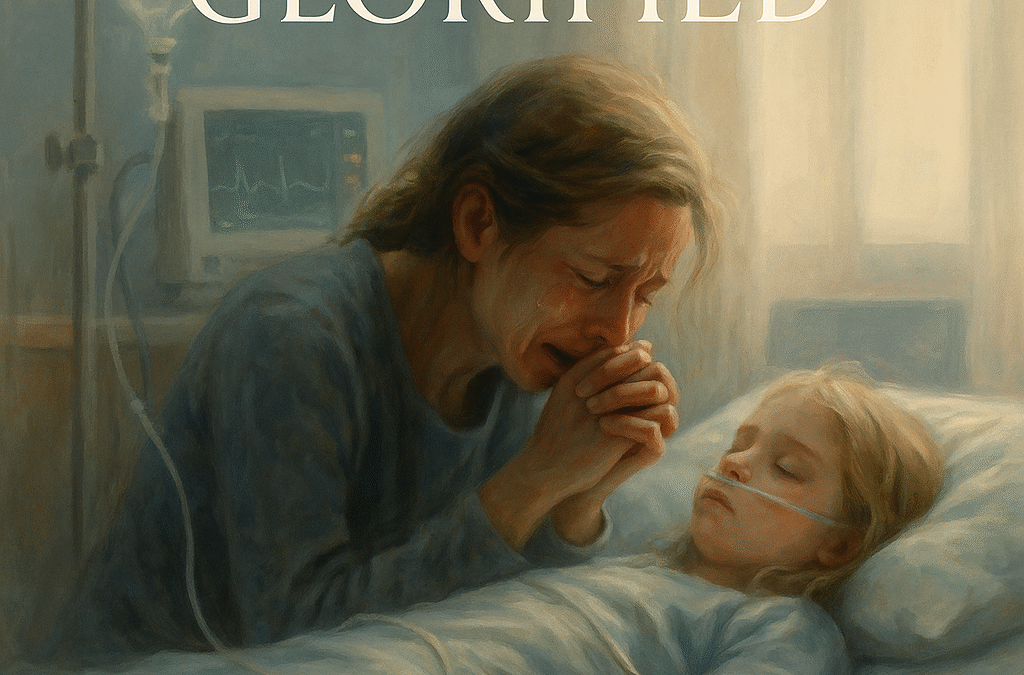
It Is Finished — So Why Do We Still Feel Ashamed?

It Is Finished — So Why Do We Still Feel Ashamed?

It Is Finished — So Why Do We Still Feel Ashamed?

It Is Finished — So Why Do We Still Feel Ashamed?

🎧 Listen to the Devotional

Press play to hear the full devotional, “It Is Finished — So Why Do We Still Feel Ashamed?”

Download audio (MP3)

The Story

The crowd dragged her through the dust, fists clenched around stones, eyes blazing with accusation.
A woman—caught in the sexual sin of adultery. A sin punishable by death.

She stood trembling in the open square, her failure made public, her shame on display. Every whisper, every glare, every heartbeat told her the same thing: shame on you — you are guilty.

The teachers of the Law confronted Jesus.
“Teacher, this woman was caught in the very act. Moses commanded us to stone such a woman. What do You say?”

It was a trap. They cared little for her sin, and even less for her soul. But Jesus didn’t answer. He stooped down and began to write in the dust with His finger—the same finger that had once written the Law on tablets of stone.

And as He wrote, the air thickened with silence. When He finally spoke, His words cut through centuries of guilt: “Let the one who is without sin cast the first stone.”

Jesus Himself was the only one there without sin—and yet He never reached for a stone. Instead, He reached for her dignity.

One by one, the stones fell from trembling hands as the religious turned away, until only the Creator of the universe—clothed in grace—remained.

Then Jesus stood, His shadow covering her shame. “Woman, where are they? Has no one condemned you?” She whispered, “No one, Lord.” And He said, “Neither do I condemn you. Go now, and leave your life of sin.”


The Word

“Therefore, there is now no condemnation for those who are in Christ Jesus.”
Romans 8:1

“For I resolved to know nothing while I was with you except Jesus Christ and Him crucified.”
1 Corinthians 2:2

This is the scandal of the Gospel — that God doesn’t wait for repentance before He saves. He brings salvation first, and repentance follows as the natural, Spirit-led response to grace.

The woman didn’t repent before she was forgiven. She was forgiven — and then she was free to turn. Love opened her eyes before obedience ever moved her feet.

We often forget what Jesus really meant when enduring the cross, despising the shame—shame that He carried for us. And then, through blood and agony, He loudly proclaimed, “It is finished!” He wasn’t announcing defeat; He was declaring victory — the end of sin’s reign, the breaking of guilt’s chains, the death of condemnation.

He has put shame to death. Yet too often, we listen to the accuser and pick it back up again.

Grace, however, keeps whispering: “Look up.” Salvation has already been given. The work is already done. God doesn’t demand repentance — He reveals His love, and repentance becomes the awakened heart’s response. When grace opens your eyes to the One standing before you — in your sin, in your weakness, yet full of love — you turn toward Him. That turning isn’t duty. It’s delight. It’s not fear. It’s freedom.

Like the woman that day, we find ourselves caught and exposed — and then lifted by hands that bear scars. He gently raises our chin, and we dare to meet His gaze. In His eyes, there is no trace of accusation. Only compassion. Only love. Only the reflection of the one He came to redeem.

He has already taken care of every sin and every shame. The verdict is done. The cross has spoken. Now, go — live in the shadow of that cross. Free to live. Alive to praise.


The Call

Stop hiding from the One who came to save you. Listen for His voice above the noise of accusation. When He says, “Neither do I condemn you,” believe Him.

Walk today as one who has seen the scandalous grace of God — and live amazed by the cross.


The Prayer

Jesus,
Open my eyes to see what You’ve already done.
Remind me that salvation isn’t something I earn — it’s something You’ve finished.
Thank You that grace comes first, and repentance follows like a heartbeat awakened by love.
Silence the accuser’s voice when shame tries to return.
Lift my head to see Your eyes of mercy.
Let me live every day unafraid, unashamed, and fully alive in the freedom You’ve already given.

Amen.

Quick Additional Thought: What Is Shame?

Shame is the voice that tells you your failure is your identity. It’s the whisper that says, “You’re not just someone who sinned — you are the sin.”

Guilt says, “I did something wrong.”
Shame says, “I am something wrong.”

And that’s the lie Jesus came to destroy. On the cross, He didn’t just carry our guilt — He carried our shame. He endured the humiliation, the nakedness, the rejection — all the things that make us hide — and He despised that shame. Why? Because it had no right to define us.

When He said, “It is finished,” He wasn’t just ending sin’s power; He was ending shame’s story. So now, in Christ, your past doesn’t name you. Your failure doesn’t brand you.

You are no longer “the one caught” — you are the one set free.

Another Thought: What Does It Mean That Jesus Bore Our Shame?

Shame was the very first result of sin. When Adam and Eve disobeyed, their eyes were opened — and they felt exposed. Their first reaction wasn’t rebellion; it was to hide.

They covered themselves and hid from the presence of God, believing their failure had changed how He saw them. But it hadn’t changed Him at all. He came looking for them. “Where are you?” He asked — not because He didn’t know, but because He refused to let shame have the final word.

That’s what Jesus came to do — to bear our shame and end the separation it causes. On the cross, He stepped into our hiding place. He endured the mocking, the nakedness, the rejection — everything shame used to convince us that God could never want us again. He bore it all so we would never have to hide again.

To bear our shame means Jesus carried not just our sin, but the distance it created. He stepped into the isolation and humiliation that shame produces. He took it all upon Himself — and in doing so, He broke its power forever.

When He endured the cross and despised the shame, He wasn’t ignoring it — He was defeating it. He faced what we fear most: being fully seen and still unloved. But instead of turning away, He loved us through it.

He stood exposed so we could stand unashamed. He faced rejection so we could walk in acceptance.

When He cried out, “It is finished,” shame’s story was over. Now, when we’re tempted to hide, He still calls softly, “Where are you?” Not to accuse — but to restore.

He bore our shame so that nothing — not even our own fear — could ever separate us from His love again.

The Life Is in the Blood

The Life Is in the Blood

The Life Is in the Blood

The Life Is in the Blood

🎧 Listen to the Devotional

Press play to hear the full devotional, “The Life Is in the Blood.”

Download audio (MP3)

The Life Is in the Blood

John 5:39 — “You search the Scriptures because you think that in them you have eternal life. And it is they that bear witness about Me.”

Martha’s hands were dusted with flour and damp with sweat. The bread was rising too fast, the stew was boiling over, and from the next room came Mary’s laughter — calm, unhurried, sitting at Jesus’ feet. When Martha’s frustration finally boiled over, Jesus didn’t shame her. He simply said, “Martha, you’re worried about many things — but only one thing is truly needed.”

It wasn’t a correction about chores; it was a call to closeness. The “better part” Mary had chosen wasn’t a task at all — it was His presence. In that quiet space at His feet, something in Mary came alive — the same thing that so often goes missing in us.

Many of us know that feeling. We hear the reminders to read more, pray more, study more — and guilt quietly starts to hum beneath the surface. You’re not spiritual enough. You don’t know the Bible well enough. But Jesus never placed that burden on us. He didn’t die so we could become scholars. He gave His life so we could become sons and daughters — filled with His Spirit, alive in His presence.

The Bible is sacred and full of truth — a gift meant to draw us closer, not weigh us down.

But it was never meant to replace the One it reveals. The religious leaders searched the Scriptures daily and still missed the Savior who stood before them. Jesus wasn’t criticizing their study — He was inviting them to relationship. “You think the Scriptures give you life,” He said, “but they point to Me.”

From the very beginning, God painted this truth into the story. In Leviticus 17:11, He said, “The life of the flesh is in the blood.” Every sacrifice, every altar, every drop of blood in those ancient rituals was a shadow pointing forward — to the moment when the Lamb of God would pour out His own blood for the life of the world. That blood on the altar was never about God demanding payment — it was His way of showing how precious life is, and how far He would go to give it back to us through His Son.

When Jesus shed His blood, the veil tore. The presence of God stepped out of the temple and into the hearts of those who believe. The words of Scripture were no longer kept on scrolls or stone — they began to be written on living hearts.

So when you open your Bible and feel nothing… when the words blur and the guilt creeps in… pause. Take a breath.
You’re not failing God. You’re being invited to listen differently.
You’re not less loved when you feel nothing. Even silence can be sacred when your heart is turned toward Him.

Let His Spirit breathe on what you read. Let the Author sit beside you. Sometimes He speaks loudly through Scripture; sometimes He whispers softly through stillness. Either way, the life isn’t in the ink — it’s in the blood that purchased your freedom, and the Spirit who brings that life to you right now.

Have you been trying to study your way closer to God when He’s simply asking you to sit with Him?
What if before reading today, you whispered, “Jesus, I’m not here for information — I’m here for You”?

📖 He didn’t give you a book to burden you with knowledge — He gave you His Spirit to breathe life into you.

Prayer:

Lord, thank You for the Scriptures that point me to You, and for the Bible that holds the story of Your love.
But help me remember — You are not far away in a book; You are near, within me, through Your Spirit.
Teach me to rest at Your feet, to listen more than I strive, and to let Your blood cleanse and fill me with real life.
When I read, let it be alive. When I don’t, let me still walk with You.
You are the Word made flesh — and You are enough.
Amen.

Peace in the Storm

Peace in the Storm

Peace in the Storm

Listen to the Devotional

Press play to hear the full devotional, “Peace in the Storm.”

Download audio (MP3)

Peace in the Storm

“Then He arose and rebuked the wind, and said to the sea, ‘Peace, be still!’ And the wind ceased and there was a great calm.”
— Mark 4:39

The day had been long. Crowds pressed close, miracles unfolded, and as evening fell, Jesus said to His disciples, “Let us cross over to the other side.” They climbed into a small fishing boat and pushed away from shore. The water shimmered under fading light as they set their course across the Sea of Galilee.

But night fell fast, and so did the storm 🌊. The wind howled across the water, churning waves high above the bow. The boat creaked and groaned, taking on water faster than they could bail. Seasoned fishermen shouted orders over the roar, their hands trembling from fear more than from cold. And there—down in the bottom of the boat—Jesus slept on a cushion.

They couldn’t believe it. With turmoil all around, He was perfectly still. Finally, someone shouted, “Teacher, don’t You care that we’re perishing?”

Jesus stood. The storm raged on, wind lashing His robe, waves breaking at His feet. But the sea fell silent the moment He spoke.
“Peace. Be still.”

The wind obeyed. The water stilled. And in the sudden calm, their fear turned to awe. “Who is this,” they whispered, “that even the wind and the sea obey Him?” Then Jesus looked at them and said softly, “Why are you so fearful? How is it that you have no faith?”

It was the same Voice that once echoed over the restless deep of creation. Long before this night, before boats and storms and frightened hearts, the Spirit of God hovered over the wild, unformed waters. The universe held its breath. There was no sound, no light, only a vast and trembling depth waiting for a word.

Then, through that ancient darkness, came the Voice. Not a human effort. Not a desperate plan. A single, sovereign command: “Let there be…” ✨ And light exploded where there had been none. Waters parted, stars awakened, and order rose from the swirling depths. Creation itself shuddered with recognition — peace had entered the world.

That same Voice now stood on the deck of a storm-tossed boat. The same Word that brought order from nothingness now was flesh and bone, resting in their storm. When the sea raged, the Creator of Heaven and Earth slept — not out of indifference, but out of authority. His rest was not apathy; it was sovereignty.

The disciples, gripped by fear, had cried out, “Teacher, don’t You care that we’re perishing?” And the Voice that once spoke galaxies into place answered again: “Peace, be still.”

In Genesis, that Voice pushed back the waters and formed the world. In Jonah’s story, that Voice spoke to the storm and the sea obeyed. And here, in Mark 4, that same eternal Voice calmed creation once more — not with effort, but with identity.

Peace didn’t come because the storm grew weaker. It came because the presence of the Creator was near. The sea has always known its Maker. And so have you.

When the storms rise in your life — the kind that toss your faith, your family, your peace — remember this: it is not necessary for the turmoil to end. It is not necessary for the storm to cease. What is necessary is for you to cry out for the voice of God — the same voice that spoke light into darkness, that shaped the mountains and quieted the sea.

His is the voice that sees you, the voice that knows you by name, the voice that breathed life into your lungs. ❤️ The voice that commands the wind still calls to your heart.

Call to Him. He will answer.

Jesus said, “Man does not live by bread alone, but by every word that proceeds from the mouth of God.” His voice still hovers over the waters. His Word still brings peace where none should be. The same Spirit that calmed creation now whispers within you.

Don’t pray merely for calmer seas. Pray to hear His voice — and let His Word speak peace into your storm.

What storm are you facing right now that needs less control and more of His voice?

Prayer:
Lord, when the waves rise and fear grips my heart, remind me that You are not distant — You are near. Speak into my storm, and let Your Word bring peace where my strength cannot. Teach me to seek Your voice above all other noise. I don’t need the storm to end, only to know that You are in the boat with me. Amen.

Little Lamps in a Dark World

Little Lamps in a Dark World

Little Lamps in a Dark World

Listen to the Devotional

Press play to hear the full devotional, “Little Lamps in a Dark World.”

Download audio (MP3)

Little Lamps in a Dark World

“Your word is a lamp to my feet and a light to my path.”
— Psalm 119:105

It was a dark time in Israel’s history. The people’s hearts had grown cold, and “the word of the Lord was rare; there were not many visions.” Corruption filled the priesthood, and spiritual hunger filled the land. Yet in the temple at Shiloh, one small lamp still flickered near the ark of God — a fragile flame burning through the long night.

The old priest Eli lay sleeping, his eyesight nearly gone. His strength was fading, but nearby a young boy named Samuel was bedding down in the Lord’s house. He had served faithfully since childhood, but his ears not used to the sound of God’s voice. In that dim stillness, with only the lamp of God glowing beside him, his life was about to change forever.

In the silence of the night, God called, “Samuel!” The boy bolted upright and ran to Eli’s side. “Here I am,” he said, certain the old priest had called him. But Eli shook his head and sent him back to bed. Again the voice came: “Samuel!” Again the boy ran. And again. Three times he heard the call before Eli understood what was happening. With what little clarity he still had left, Eli told the boy, “Go and lie down, and if He calls you again, say, ‘Speak, Lord, for your servant is listening.’” And when the Lord came and stood, calling as before, “Samuel! Samuel!” the boy answered, “Speak, Lord, for your servant is listening.”

That small lamp in the temple was more than just a light in the night. It symbolized God’s presence — a reminder that though His voice had grown rare, His nearness had not departed. And this night was only the beginning. Samuel would carry a hard word to Eli’s house, call Israel to repentance at Mizpah, and later anoint first Saul and then David as king. He would grow into a prophet who carried God’s Word to a people who would not listen — or would never listen — but he still spoke faithfully, shining light into the darkness of his generation. The lamp beside him burned through the night; the light within him would burn through the years.

The same presence of God that burned beside Samuel burns with us today. Jesus said, “You are the light of the world. A city on a hill cannot be hidden. Neither do people light a lamp and put it under a basket, but on a stand, and it gives light to everyone in the house.” Just as the temple lamp reminded Israel that God was near, our lives now carry His light into the world. We are His lamps, burning with His presence, pushing back the shadows.

We live in a world much like Samuel’s — shadows press in, and the word of God can seem rare. But His light has not gone out. His Word still burns, even if only enough to illuminate the next step. Like Samuel, we don’t always understand what God is doing, but we can choose a posture of readiness: “Here I am.”

Don’t underestimate the power of a little lamp. God’s Word and your obedient heart can shine brighter than you realize. Someone else may find their way because you kept your lamp burning.

People may not listen to your words either, but they cannot ignore your life. Speak anyway. Use words, or use example — but never stop shining your light. Don’t wait for the world to notice — shine where you are, and trust God to do the rest.

Why We’re Here

Why We’re Here

Why We’re Here

Why We’re Here

Listen to the Devotional

Press play to hear the full devotional, “Why We’re Here.”

Download audio (MP3)

“Carry each other’s burdens, and in this way you will fulfill the law of Christ.” Galatians 6:2

This week we’re pausing from our usual format to simply introduce ourselves and share a little more about why we do this.

We are Dave and Amy, and we started this blog not because we have all the answers, but because we care about you. We believe God calls His people to walk together, to remind one another that none of us are ever truly alone. Life can be heavy, but when love is shared, the weight begins to lift.

The Bible tells us to “love one another” (John 13:34), to “encourage one another and build each other up” (1 Thessalonians 5:11), and to “bear one another’s burdens” (Galatians 6:2). That is what we want this blog to be—a place where burdens are shared, love is real, and encouragement flows both ways.

We would prefer to know each of you personally—to sit down over a cup of coffee, to hear about your family, to understand your struggles, and to walk beside you in this journey called life. But in this modern age, it has become difficult to connect in traditional ways with most of you. Thankfully, we are blessed with technology that can reach around the globe. Through this space, we can share the journey and walk alongside one another no matter where you live.

But here’s the key: this is not just about us writing and you reading. It’s about knowing that someone truly cares for you. To share the journey well, we need to listen to your heart as much as we share ours. You have several ways to connect:

  • Leave a comment below this blog (we read and share them).
  • Reach out to the person who first shared this with you.
  • Or, scroll down to the black “Footer” on this page and click the “Contact” link.

If you’d like to receive the short daily “sticky-notes” we send out—little nuggets of encouragement that flow from the weekly blog—send us an email with your phone number, and we’ll add you to the daily text list.

We also want you to understand how this blog works. The weekly blog itself is more of a story—a teaching opportunity that helps us learn, grow, and be encouraged through scripture. The daily sticky-notes, on the other hand, are like reflections or nuggets that spring from the main blog. They’re shorter, quicker encouragements to keep the truth alive in your heart throughout the week. Think of the blog as the deeper teaching moment, and the sticky-notes as gentle reminders of what you received.

At the heart of it all, our goal isn’t simply to “teach the Bible” in the traditional sense. Yes, scripture is central. But more than that, we want you to know that you are loved—by God, and by us. This space is about drawing near to Jesus together, letting His love and truth bring us closer to Him and closer to one another. Scripture and the Holy Spirit are like two strands of the same cord, woven tightly together. One gives us the truth, the other gives us life. Woven together, they form a rope strong enough to guide and hold us close to Him.

So, we’d love to hear from you. Are you walking through something heavy? Do you have questions about scripture, or about how to listen for God’s voice? Maybe you simply need someone to pray with you. Please don’t hesitate to reach out—we’re here to walk this journey together.

✨ Our goal is simple: that we all grow together in Jesus Christ.