Before reading this week’s reflection, I encourage you to slowly read Genesis 17 and the first half of Genesis 18.
Listen to the Reflection
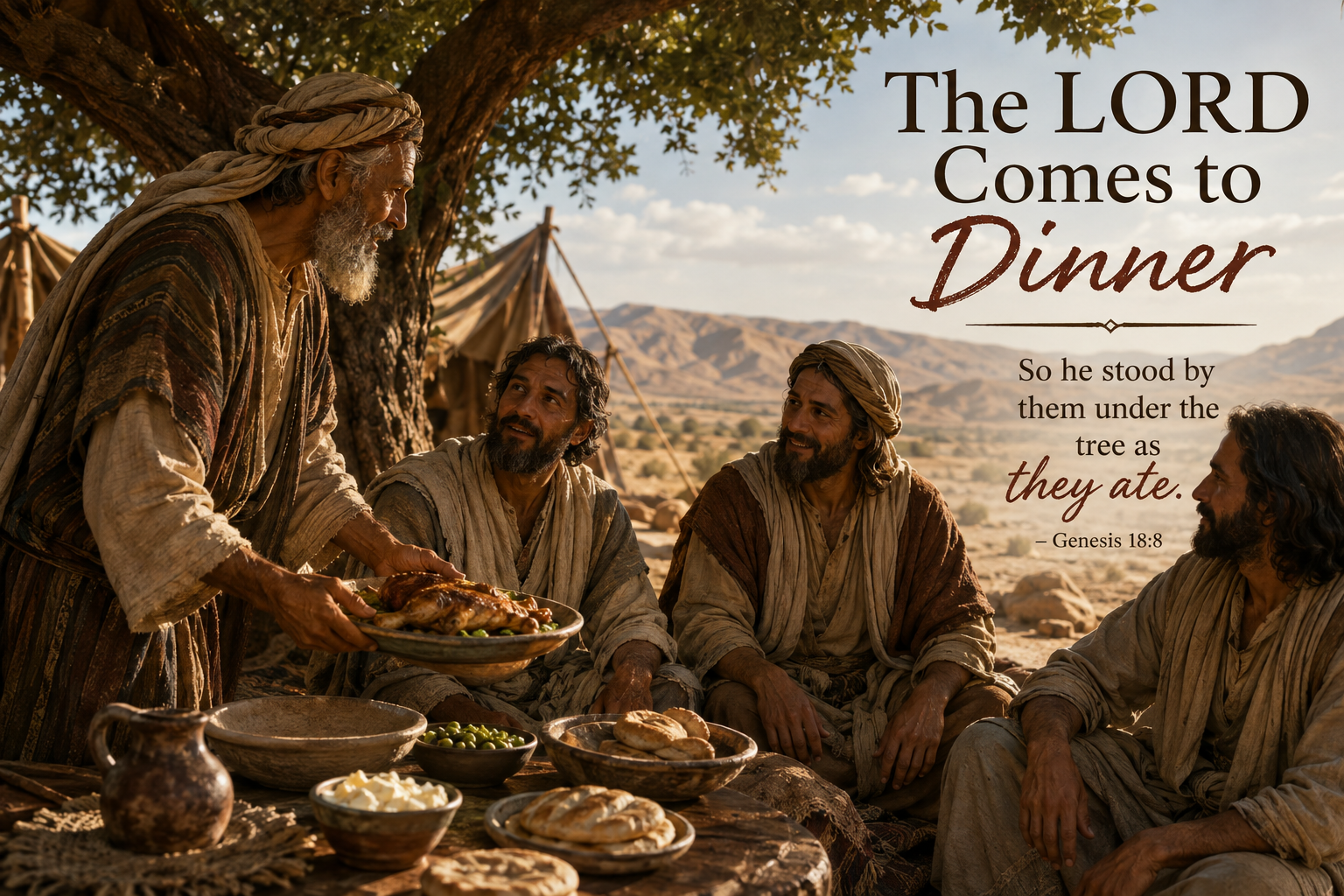
The LORD Comes to Dinner
The LORD Comes to Dinner
Thirteen years have passed.
That is easy to miss when we turn the page from one chapter to the next. When Ishmael was born, Abram was eighty-six years old. Then Genesis 17 begins:
“When Abram was ninety-nine years old, the LORD appeared to Abram...” — Genesis 17:1
Ishmael is no longer the baby Hagar carried home from the wilderness. He is thirteen years old, becoming a young man. Abram is nearly one hundred. Sarai is nearly ninety. And the promise that began so many years earlier still has not been fulfilled.
Then the LORD appears.
The Father has not forgotten what He said. In fact, this time the promise becomes even more specific.
Abram will become Abraham. Sarai will become Sarah. Before anything has changed in their circumstances, the Father begins calling them by names that speak toward a future they cannot yet see.
And now He says it plainly. The promised son will not simply come from Abraham. He will come through Sarah.
“Sarah your wife shall bear you a son, and you shall call his name Isaac.” — Genesis 17:19
Abraham falls on his face and laughs.
Perhaps we are too quick to call that unbelief. Abraham has spent years trusting the Father. He has left his homeland, built altars, stood beneath the stars, and watched the Father walk through blood and fire and place Himself behind His promise.
But Abraham is also almost one hundred years old. Sarah is almost ninety.
This is impossible.
And Abraham already has a son whom he loves.
“Oh, that Ishmael might live before You!”
I love the Father’s response:
“As for Ishmael, I have heard you. Behold, I have blessed him...” — Genesis 17:20
There it is again: I have heard.
The God who heard Hagar in the wilderness has not stopped hearing. Ishmael will be blessed. But the promised son will come through Sarah.
His name will be Isaac.
Laughter.
The Promise Leaves a Mark
Then the Father gives Abraham the sign of circumcision.
For years the promise has concerned Abraham’s seed—the generations that will come from him. Now God places the covenant mark upon the very flesh through which that seed will come. Paul would later call circumcision a sign and seal of the faith Abraham already possessed. The mark did not create the promise; it testified that the promise belonged to God.
But we shouldn’t picture this as a small private ceremony involving Abraham and Ishmael.
Years earlier, Abraham had taken 318 trained men born in his own household into battle to rescue Lot. Those were only his fighting men born in the household. Abraham’s entire community included families, servants, shepherds, children, men purchased from foreign lands, and others living under his care.
This was an enormous household.
And now God said every male was to bear the mark.
Abraham at ninety-nine. Ishmael at thirteen. Grown men. Young boys. Those born in the household and those purchased from somewhere else.
This was intimate, bloody and painful. It affected hundreds of people throughout Abraham’s camp. Whatever mixture of ancient household authority, loyalty and trust was involved, these people followed Abraham into something extraordinarily personal because Abraham said the God he followed had spoken.
And Genesis tells us Abraham did it “that very same day.”
Abraham had spent years waiting on God. When God spoke, Abraham did not make God wait on him.
Then Genesis turns the page.
The LORD Comes to Dinner
“Then the LORD appeared to him by the terebinth trees of Mamre...” — Genesis 18:1
Ancient Jewish tradition imagines this appearance as the Father visiting Abraham while he recovered from circumcision. Genesis doesn’t tell us that is why He came, but it is a tender picture preserved by people who had been pondering this story for generations.
What Genesis does tell us is remarkable enough.
Abraham is sitting at the entrance of his tent during the heat of the day when he looks up and sees three men.
And Abraham runs to meet them.
This ninety-nine-year-old patriarch, leader of an enormous household, runs from his tent and bows to the ground before strangers. He offers water for their feet and shade beneath the tree. He hurries to Sarah and asks her to make bread. Then he runs again to the herd, chooses a calf and has it prepared.
The covenant has just marked Abraham’s household as belonging to God. And almost immediately, we see that household opening itself to strangers.
Bread. Meat. Curds. Milk.
Abraham prepares a table for them.
Then comes a sentence we could easily read without feeling the weight of it:
“So he stood by them under the tree as they ate.” — Genesis 18:8
They ate.
The Creator of the universe is sitting beneath a tree, eating dinner at Abraham’s home.
It is worth staying here for a moment.
This is the God who spoke light into darkness and hung the stars Abraham once stared at in the night sky. He formed humanity from dust and breathed life into its lungs. He shut Noah inside the ark, scattered Babel, and walked through Abraham’s covenant in smoke and fire.
And now Sarah is baking bread, Abraham is standing nearby serving his guests, and God is beneath their tree eating their food.
Perhaps that shouldn’t surprise us as much as it does.
Because isn’t this what the Father has wanted from the beginning?
In Eden, He walked in the garden with humanity. He did not create men and women merely to rule them from a distant heaven. He made them for relationship—to know Him and trust Him, to enjoy His presence and share life with the Father who gave them life.
Then another voice whispered that perhaps He could not be trusted. Suspicion entered where there had been intimacy. Shame replaced openness. Humanity hid from the very One who had come to walk with them.
Yet the Father’s desire did not change.
Through all the hiding, violence, wandering and mistrust, He continued moving toward humanity.
And here, beneath the trees of Mamre, we catch another glimpse of what He has wanted all along.
The Almighty God who makes covenants in blood and fire is also the Father who comes close enough to eat beneath a tree with His friend.
And this picture will keep appearing.
Centuries later, Jesus will sit at tables with His friends. He will eat with tax collectors and sinners, with people respectable religious men thought He should avoid. He will accept invitations into homes and invite Himself into others. Again and again, God in flesh will sit down and eat with people.
On the night before the cross, Jesus will gather His closest friends around a table. He will take bread into His hands, break it and pass it among them.
Then, astonishingly, death itself will not end this desire for simple human closeness.
After the resurrection, the disciples will come ashore after a long night on the water and discover Jesus beside a charcoal fire. Fish is cooking. Bread is waiting.
And the resurrected Lord says:
“Come and eat breakfast.” — John 21:12
I love that.
The One who defeated death wanted breakfast with His friends.
And at the far end of the biblical story, John hears the same desire one more time:
“Behold, the tabernacle of God is with men, and He will dwell with them...” — Revelation 21:3
Eden.
A tree at Mamre.
Tables throughout Galilee.
An upper room.
Breakfast beside the sea.
And ultimately, God dwelling with humanity forever.
The Father’s desire has never changed.
He wants to be with us.
And there, beneath Abraham’s tree, the conversation turns toward Sarah.
Sarah Laughs
“Where is Sarah your wife?”
She is inside the tent, listening.
Then the visitor says:
“I will certainly return to you according to the time of life, and behold, Sarah your wife shall have a son.”
Sarah laughs within herself.
Can we blame her? She knows her body. She knows Abraham’s age. She knows how long they have waited.
This isn’t merely unlikely anymore. It is impossible.
Then comes the question:
“Is anything too hard for the LORD?” — Genesis 18:14
Sarah becomes frightened and denies laughing.
“I did not laugh.”
And the LORD answers:
“No, but you did laugh.”
I can’t help but smile at that exchange. There is something wonderfully personal about it.
Sarah laughed. The Father knew. And the promise remained.
He didn’t withdraw it. He didn’t search for a woman with stronger faith. He wasn’t threatened by her questions or her laughter. Her inability to imagine the promise did not limit His ability to fulfill it.
Eventually Sarah will hold that impossible little boy in her arms and laugh again:
“God has made me laugh, and all who hear will laugh with me.” — Genesis 21:6
The Father didn’t take away Sarah’s laughter. He changed what she was laughing about.
Paul later looks back at Abraham’s story and describes the One Abraham trusted as God “who gives life to the dead and calls those things which do not exist as though they did.” — Romans 4:17
That is the Father we’ve been discovering. The One who brings life where life seems impossible. The One who remembers promises after years have passed. The One who isn’t frightened by our questions. The One who hears us.
And the One who comes near.
Abraham had waited. Sarah had grown old. The promise seemed more impossible than ever.
And before Isaac ever arrived, the LORD came to dinner.
He came beneath their tree. He ate their food. He listened to their laughter. He reminded them of His promise.
Sometimes the Father answers our fear by changing the circumstances.
And sometimes, before He changes anything at all...
Before reading this week’s reflection, I encourage you to slowly read Genesis 16.
🎧 Listen to this week’s reflection
The God Who Sees Me
The story of Abram has been filled with extraordinary moments.
The Father called him from his homeland. He spoke to him beneath the stars. He promised descendants beyond number. He walked the blood path and placed Himself behind His promise.
Then Genesis does something unexpected.
It turns our attention away from Abram.
And follows a servant woman into the wilderness.
Her name is Hagar.
Sarai has waited years for the child the Father promised. She is growing older, and still there is no son. So she gives her Egyptian servant Hagar to Abram as a wife.
Modern readers are often quick to stop here and declare that Abram and Sarai have lost faith and decided to accomplish God’s promise themselves.
Perhaps.
But Genesis doesn’t actually say that.
In their world, a barren wife giving her servant to her husband as a wife in order to produce an heir was culturally recognizable. And although the Father had promised Abram that his heir would come from his own body, He had not yet explicitly said that Sarai would be the mother.
So perhaps we should be slower to judge and simply allow Genesis to tell the story.
Hagar conceives.
And almost immediately, things begin to unravel.
Genesis tells us that when Hagar realizes she is pregnant, Sarai becomes despised in her eyes. The servant can suddenly do the one thing her mistress has desperately wanted to do for years.
Sarai responds harshly.
The Hebrew is uncomfortable. The word carries the idea of affliction, oppression, or harsh treatment.
Whatever happened inside those tents, it became unbearable enough that Hagar ran.
Genesis doesn’t give us a hero in this conflict.
Hagar is flawed.
Sarai is flawed.
Abram is flawed.
Sometimes people who genuinely know the Father still hurt one another.
And sometimes we are the ones who get hurt.
Hagar is living inside decisions largely made by people with more power than she has. She didn’t choose Sarai’s barrenness. She didn’t make the promises that had shaped Abram’s household. She didn’t create the longing and tension surrounding an heir.
Yet somehow she finds herself carrying the consequences.
Millions of people know what that feels like.
Sometimes the wounds we carry were caused by decisions we never made. A parent. A spouse. An employer. A church. Someone with authority. Someone we trusted.
Sometimes we contributed to the mess ourselves.
Sometimes we didn’t.
And sometimes the pain becomes so great that all we know to do is run.
Hagar runs into the wilderness.
And then comes one of the most beautiful little sentences in Genesis:
“Now the Angel of the LORD found her by a spring of water in the wilderness...” — Genesis 16:7
He found her.
The great story of Abraham and the covenant suddenly leaves the patriarch behind and follows an Egyptian servant woman into the desert.
And the Father goes looking for her.
This shouldn’t surprise us.
When Adam hid among the trees, the Father came asking, “Where are you?”
When Cain stood alone with the blood of his brother crying from the ground, the Father came and spoke to him.
And centuries later, Jesus would describe the same heart:
“For the Son of Man has come to seek and to save that which was lost.” — Luke 19:10
The Father has always been a seeker.
And now He seeks Hagar.
Then He does something remarkably tender.
He calls her by name.
“Hagar, Sarai’s maid, where have you come from, and where are you going?” — Genesis 16:8
The Father knows exactly where she has come from.
He knows exactly where she is going.
The questions are not for Him.
They are for her.
Hagar can answer the first.
“I am fleeing from the presence of my mistress Sarai.”
But she never answers the second.
She knows what she is running from.
She doesn’t know where she is running to.
Maybe you’ve been there.
You know what hurt you.
You know what you’re trying to escape.
You just don’t know what comes next.
But the Father does.
He tells Hagar to return, and then He speaks an extraordinary promise over her:
“I will multiply your descendants exceedingly, so that they shall not be counted for multitude.” — Genesis 16:10
Listen to that language.
It sounds remarkably similar to the blessing spoken over Abram.
The Father does not merely keep Hagar alive and send her back to Abram’s household.
He blesses her.
Then He tells her about the child she carries:
“You shall call his name Ishmael, because the LORD has heard your affliction.” — Genesis 16:11
Ishmael.God hears.
The cries Hagar may have believed disappeared into the wilderness had reached the Father.
He heard what happened.
He heard her pain.
He heard her affliction.
And Hagar suddenly realizes something even greater.
The One who found her was not merely a messenger passing along information from a distant God. Genesis tells us plainly:
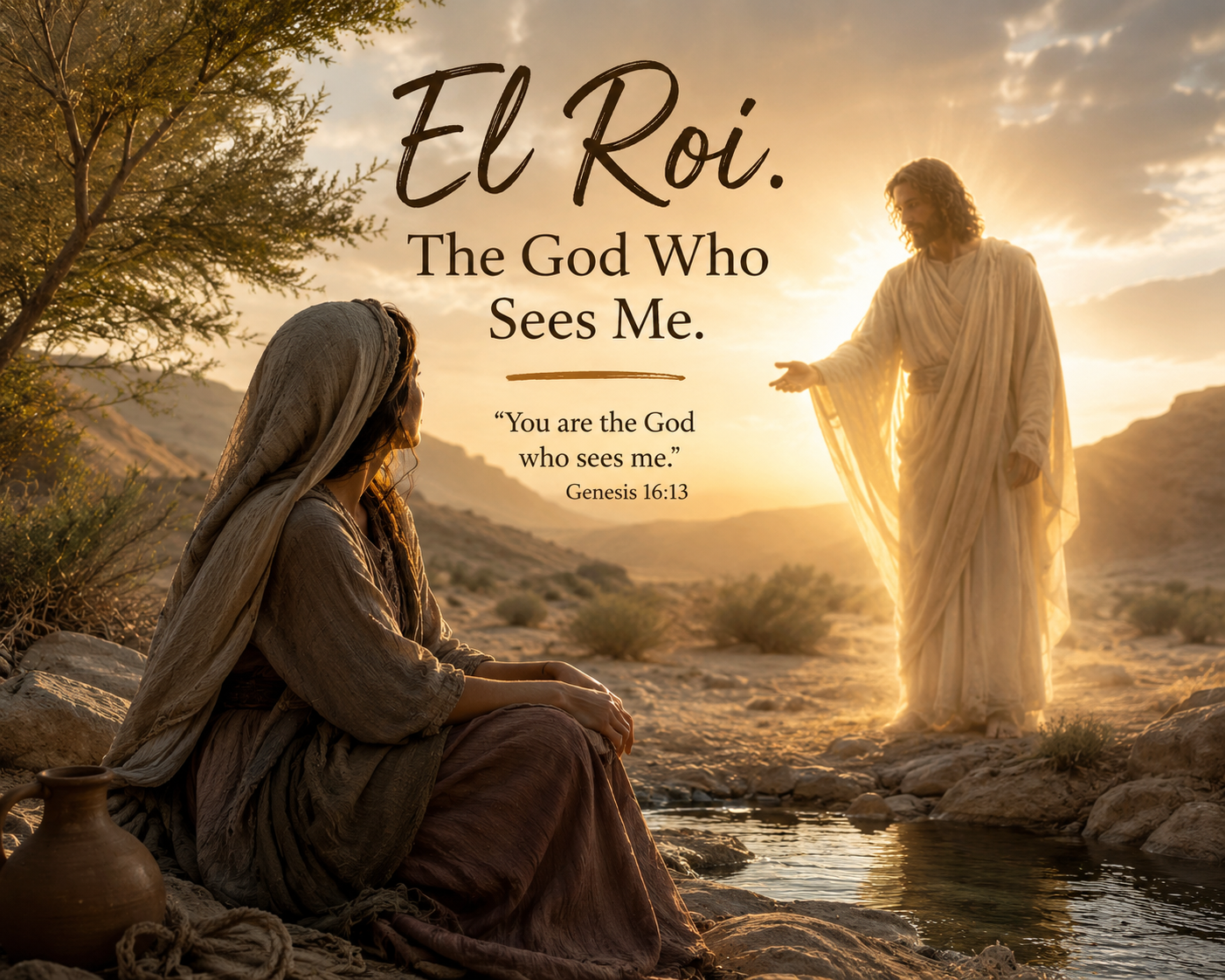
“Then she called the name of the LORD who spoke to her, You-Are-the-God-Who-Sees...” — Genesis 16:13
The LORD who spoke to her.
Yahweh.
And Hagar gives Him a name born from her own encounter:
El Roi.
The God who sees me.
Ishmael’s name declares:
The Father hears.
Hagar’s name for God declares:
The Father sees.
And suddenly this little wilderness encounter reveals something enormous about the Father.
We expect Him to pursue Abram.
Abram is the patriarch.
Abram carries the promise.
Abram is the man who stood beneath the stars and watched the Father walk the blood path.
But Hagar?
She’s an Egyptian servant woman running through the wilderness.
The world could easily overlook her.
The Father could not.
And centuries later, Scripture gives us a strangely familiar scene.
Another woman.
Another complicated story.
Another well.
This time she is a Samaritan, and Jesus meets her beside the water. He knows the parts of her story a stranger could not possibly know. And after encountering Him, she leaves her waterpot behind and runs into the city saying:
“Come, see a Man who told me all things that I ever did.” — John 4:29
Hagar had discovered it centuries before.
He sees me.
Different woman.
Different well. Same God.
We shouldn’t miss who these women are.
Neither is a patriarch. Neither possesses great social standing. Neither appears to be someone around whom we would expect God to build an extraordinary encounter.
Yet both walk away as witnesses to something they discovered about Him.
The Father sees people others overlook.
And perhaps that is what someone needs to hear today.
You may have been hurt by someone who should have loved you better.
You may be living with consequences from decisions you never made.
You may even have contributed to the mess and wonder whether that disqualifies you from being pursued by the Father.
Hagar’s story says otherwise.
The Father did not have to choose between loving Abram and seeing the woman Abram’s household had wounded.
He loved Abram.
And He went looking for Hagar.
Maybe you cannot see what the Father is doing right now.
Maybe you don’t know where you’re going.
Maybe all you know is where you’ve come from.
But you have not disappeared from His sight.
The Father hears.
The Father sees.
And sometimes, in the wilderness, we discover something about Him that we could never have learned inside the safety of the tent.
Before reading this week’s reflection, I encourage you to slowly read Genesis 15.
🎧 Listen to this week’s reflection
But Father... You Said
Abram has just returned from battle. He has rescued Lot, defeated powerful kings, and refused the riches offered by the king of Sodom. Then the Father comes to him:
“Do not be afraid, Abram. I am your shield, your exceedingly great reward.” — Genesis 15:1
We ended our last story with a simple truth: God Himself is the blessing.
Now the Father says it Himself.
Not merely, I will reward you.
I am your reward.
But Abram has a problem.
The Father has promised Abram a future that cannot exist without a son. He has promised to make him a great nation and declared that through him the families of the earth will be blessed.
Yet Abram is growing old, and there is no heir.
To us, that may sound like the understandable sorrow of a man who desperately wants a child. But in Abram’s world, an heir represented something even larger. His name, his household, his inheritance, his story—his future—would continue through his descendants. Without an heir, everything appeared to end with him.
And yet the Father had promised generations.
So Abram does something I find beautiful.
He questions God.
Not with disrespect. Not because he has stopped believing. Abram speaks with what Jewish culture might call chutzpah—a boldness born from relationship, the confidence to press someone because you trust them enough to take their words seriously.
Abram is essentially saying:
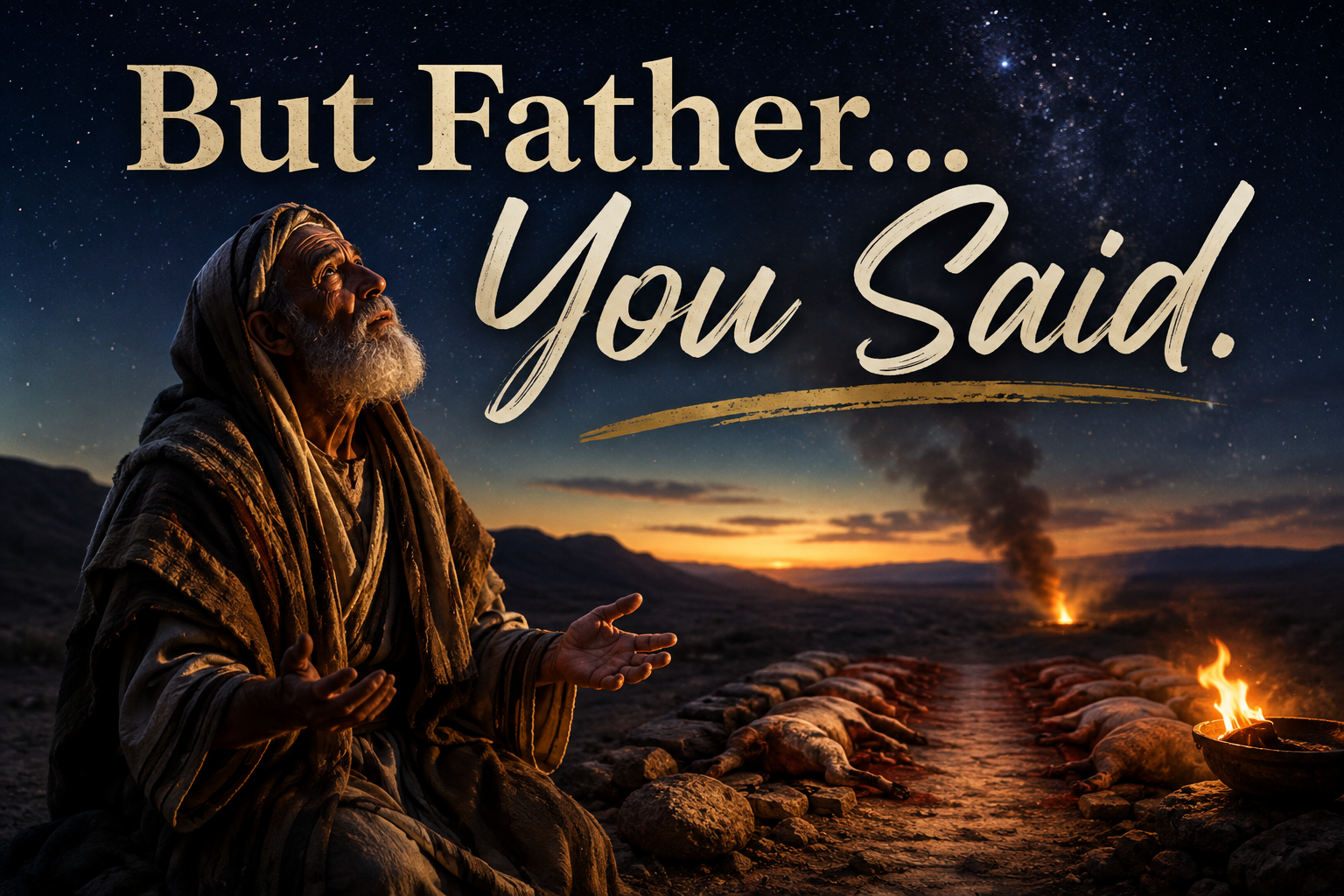
“But Father... You said.”
Abram can question boldly and believe deeply at the same time. His questions are not the opposite of faith.
And the Father is not offended.
He takes Abram outside.
Imagine standing beneath that night sky more than four thousand years ago. No city lights. No glowing horizon. Nothing to dim the vast expanse above him. Abram looks into a darkness filled with more stars than he could possibly count.
Then the Father says:
“Look now toward heaven, and count the stars if you are able to number them... So shall your descendants be.” — Genesis 15:5
Abram sees no son.
The Father shows him generations.
Nothing about Abram’s circumstances has changed. Sarai is still barren. Abram is still old. There is still no child sleeping in their tent.
But now Abram is looking at the impossible while standing beside the One who promised it.
And Genesis gives us one of the most important sentences in all of Scripture:
“And he believed in the LORD, and He accounted it to him for righteousness.” — Genesis 15:6
Centuries later, Paul will reach all the way back to this night:
“For what does the Scripture say? ‘Abraham believed God, and it was accounted to him for righteousness.’” — Romans 4:3
Abram’s questions were not evidence that faith had disappeared. Here was a man with honest questions who placed his trust in the One who spoke.
Then Abram asks again:
“Lord GOD, how shall I know that I will inherit it?” — Genesis 15:8
Again, the Father does not rebuke him.
He answers.
God tells Abram to bring several animals. Abram cuts them in two and places the pieces opposite one another.
To an ancient reader, the scene carried enormous significance. Covenants were serious things. Walking the blood-soaked path between the pieces was a terrible declaration: If I break my word, may what happened to these animals happen to me.
Abram prepares everything.
And then... nothing.
So he waits.
As the hours pass, birds of prey descend upon the animals, and Abram drives them away. He cannot make God come. He cannot make the fire appear. He cannot make the promise happen. All Abram can do is remain faithful to what the Father has placed before him and wait for the Father to move.
Perhaps Abram had been learning that lesson for years.
A son had been promised.
A land had been promised.
A blessing had been promised.
And still, Abram waited.
Later Scripture will remember this very thing about him:
“And so, after he had patiently endured, he obtained the promise.” — Hebrews 6:15
There are few things more difficult than waiting on a promise from God when you have already done everything you know to do.
Abram’s responsibility was faithfulness while he waited. The Father’s responsibility was fulfillment.
Waiting did not mean the Father had forgotten.
Eventually the sun disappears, and a deep and dreadful darkness falls over Abram.
Even here, the Father does not offer an easy story.
He tells Abram that his descendants will indeed inherit the promise—but first they will be strangers in another land. They will suffer. They will be oppressed.
The promise is real.
So is the darkness.
The Father never told Abram that blessing meant the absence of suffering. He told him the truth about the road ahead and remained faithful to the destination.
Then, in the darkness, something appears.
Smoke.
Fire.
Throughout Scripture, fire often accompanies the presence of God. Moses will encounter Him in a bush that burns but is not consumed. Israel will see Him descend upon Sinai in fire. A pillar of fire will lead His people through the wilderness.
When fire appears in a divine encounter, it is worth paying attention.
A smoking oven and a burning torch move between the pieces.
But Abram does not.
The Father walks the blood path alone.
Abram had asked:
“How shall I know?”
And the Father answers not merely with another promise, but by placing Himself behind the promise.
I said it. I will do it. And the cost of this covenant rests upon Me.
Centuries later, on another Passover night, Jesus would leave the upper room and cross the Kidron Valley on His way to the garden.
Jerusalem was overflowing with pilgrims, and thousands upon thousands of Passover lambs were being sacrificed. Ancient descriptions of the feast give us a sobering picture of the enormous amount of blood produced by those sacrifices and carried away from the Temple.
Imagine Jesus stepping into the Kidron on His way toward Gethsemane, the water stained with the blood of Passover lambs.
What went through His mind?
Did He remember another blood path?
Another night?
Another covenant?
This time, the Son of God was not walking between the pieces of another sacrifice.
He was walking toward becoming the sacrifice Himself.
John would describe Jesus as:
“The Lamb of God who takes away the sin of the world!” — John 1:29
Long before Bethlehem, Gethsemane, or the cross, Genesis had already shown us something about the Father’s heart.
God is willing to walk the blood path Himself.
And eventually, He would bear the cost Himself.
Abram began with questions.
The Father did not silence him.
He took him outside.
He showed him the stars.
He allowed him to wait.
He told him the truth about the darkness.
And then He walked the blood path.
Perhaps there are moments when faith sounds less like quiet certainty and more like a child holding tightly to the Father’s words:
“But Father... You said.”
The Father is not threatened by that kind of faith.
The promise has never rested upon our ability to understand how He will accomplish it. It rests upon the character of the One who spoke.
He said it. He will do it. And He has always been willing to bear the cost.
Before reading this week’s reflection, I encourage you to slowly read Genesis 12–14.
As you read, pay attention to a phrase that appears more than once:
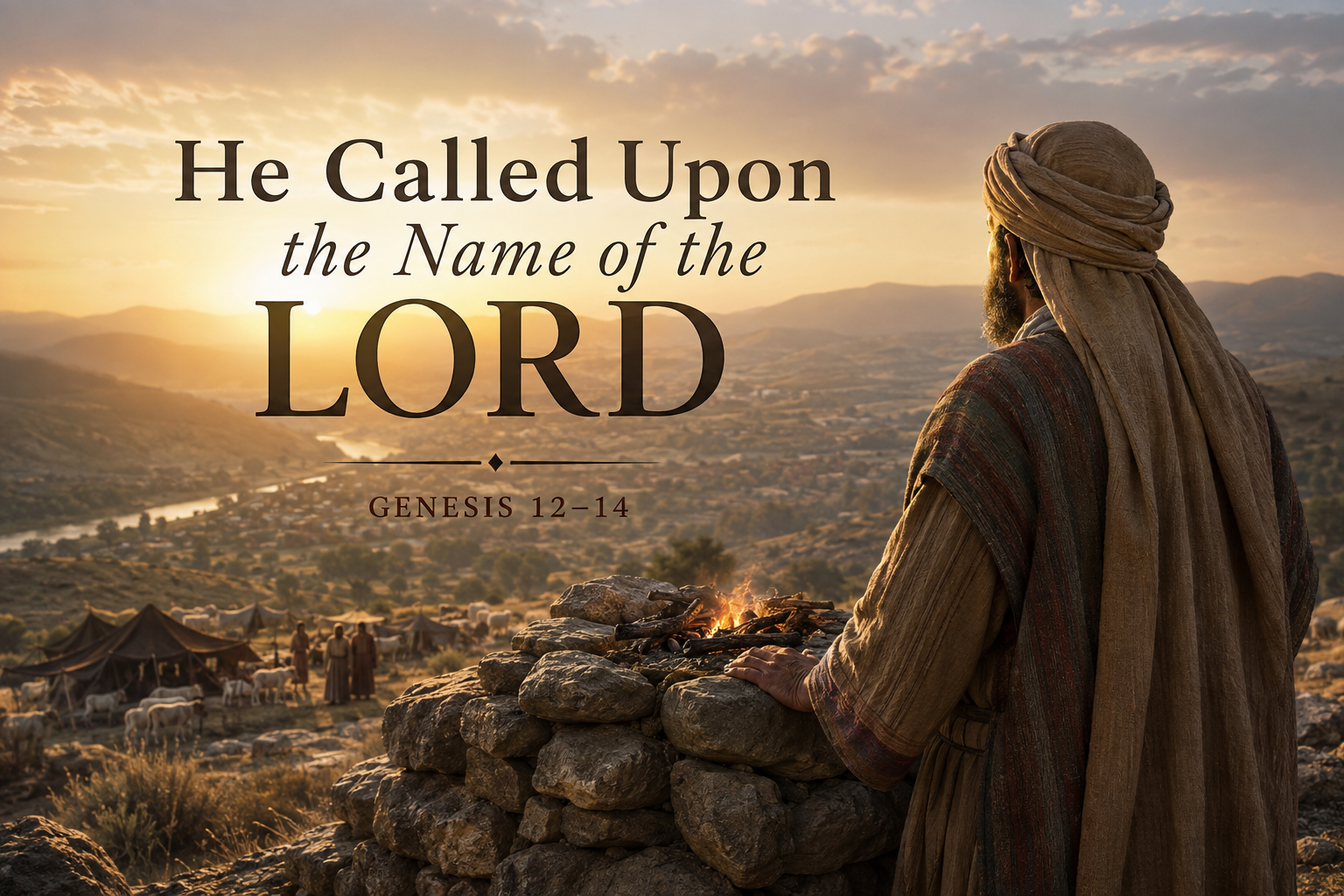
“Abram called upon the name of the LORD.”
Listen to this week’s audio reflection:
He Called Upon the Name of the LORD
It is easy to read those words as a simple description of prayer. Abram stopped, built an altar, and worshiped. Yet there is something richer happening here. Abram was not merely speaking privately to God. He was proclaiming the name of Yahweh—announcing His character and making Him known in a land filled with other gods.
That is remarkable when we remember where Abram’s story began.
For decades, Noah and Shem had welcomed him into a home where the Father was known—not merely discussed, but lived. They had not simply taught Abram facts about God. They shared life with him. Abram watched what it looked like to trust the Father, to remember His faithfulness, to listen for His voice, and to walk with Him through ordinary days. Somewhere along the way, the stories became more than stories. Abram came to know the Father for himself.
Now the boy who had listened was becoming a man who would carry that knowledge into the world.
The story begins, as so many stories in Genesis do, with the Father speaking.
“Then the LORD appeared to Abram and said...”
— Genesis 12:7
Before Abram built an altar, the Father appeared. Before Abram called upon His name, the Father spoke.
That has been the pattern from the beginning. God spoke light into darkness. He came looking for Adam in the garden. He spoke to Cain before anger consumed him. He called Noah before the flood. Now He appears to Abram.
The Father always moves first.
Abram responds by building an altar. Certainly sacrifices were associated with altars, but this altar was more than a place of sacrifice. It marked a place of encounter and remembrance. Long after the fire had died and the offering was gone, the stones remained as a quiet testimony:
The Father spoke here.
That idea will echo throughout Scripture. Generations later, after Israel crosses the Jordan, Joshua will pile twelve stones beside the river. When children ask, “What do these stones mean?” their parents are to tell them what the LORD has done. The stones have no power of their own. Their purpose is remembrance. They preserve the story so another generation can know the God who acted there.
Abram’s altar did something similar. It marked a place where Yahweh had appeared, where a promise had been spoken, and where Abram had answered.
Then something unexpected happens.
The Father calls Abram into the land of promise. He promises a blessing that will eventually reach every family of the earth. Abram obeys. He worships. He builds altars. He calls upon the name of Yahweh.
And then a famine comes.
The first thing Abram finds in the land of promise is not abundance. It is hunger.
We often picture Abram and Sarai traveling alone, but Genesis paints a much larger picture. Abram was responsible for servants, shepherds, families, flocks, herds, and possessions. By Genesis 14, he could gather 318 trained men born within his household. Those men represented families and lives of their own. When the land could no longer sustain them, Abram was responsible for far more than his own next meal.
The promise had not changed, but everything Abram could see seemed to contradict it.
Father, You brought us here. Now what?
That question has never really disappeared. We obey, and the road becomes harder. We follow, and provision seems to disappear. We trust, and circumstances appear to contradict the promise.
Genesis does not pretend that the Father’s blessing removes us from a broken world. Abram is blessed, yet famine still comes. Hunger is real. Families still need bread.
Perhaps blessing was never the absence of hardship. Perhaps blessing has always been the presence of the Father.
Abram goes down to Egypt because bread matters. Scripture does not pause to condemn his decision. It simply tells the story of a man trying to preserve the lives entrusted to him while navigating fear, uncertainty, and a foreign king.
And it is difficult not to smile at one detail. Sarai is around seventy-five years old, yet she is still considered so remarkably beautiful that Pharaoh desires her for himself. Genesis has a wonderful way of reminding us that these were not lifeless figures in an ancient painting. They were real people living astonishing lives.
But what begins as a search for bread becomes something far more painful. Sarai is taken into Pharaoh’s house. Abram has left the land the Father promised, and now the woman through whom that promise must continue is in another man’s household. The famine has become more than hunger. Everything Abram has been promised seems suddenly fragile.
Yet the Father remains faithful.
He protects Sarai. He preserves the promise. He does not abandon Abram when the road becomes complicated. Genesis never tells us that the Father withdrew His blessing or reconsidered His call. Abram’s circumstances changed. The Father’s faithfulness did not.
When Abram finally leaves Egypt, Genesis does not merely say that he returned to Bethel. It carefully tells us that he returned:
“to the place of the altar which he had made there at first. And there Abram called on the name of the LORD.”
— Genesis 13:4
He returned to the place of remembrance—the place where Yahweh had appeared, where the Father had spoken.
The altar had remained while Abram was in Egypt.
Its stones still quietly testified to the promise. Famine had come. Egypt had happened. Sarai had been taken. Yet none of those things had erased what the Father had said.
Centuries later, Jesus would stand hungry in another wilderness and answer temptation with the words Moses had given Israel:
“Man shall not live by bread alone, but by every word that proceeds from the mouth of God.”
— Matthew 4:4
Bread matters. Jesus did not deny hunger, and Genesis does not minimize famine. But bread alone cannot sustain the deepest part of us. Eventually, every journey must return to the Father’s voice.
Abram returned to the altar because it reminded him of what the Father had already said.
Then he continued his journey.
Wherever Abram went, he built altars and called upon the name of Yahweh. He carried the knowledge of the Father into places where the Father was not known. Surrounded by pagan nations, local kings, and people who worshiped gods shaped by human hands, Abram announced another name. He proclaimed the character of the living God who speaks, calls, protects, remembers, and remains faithful.
We are not told how many people listened or how many lives were changed. But the blessing had begun to move outward, just as the Father said it would:
“I will bless you... and you shall be a blessing... and in you all the families of the earth shall be blessed.”
— Genesis 12:2–3
The Father never blesses anyone simply for their own sake. He blesses people so His blessing can continue through them.
Noah had received grace and preserved life. Shem had received the stories and preserved the knowledge of God. Now Abram was carrying that inheritance into the nations. What had been lived before his eyes was becoming the life he lived before others.
That makes the closing scene of Genesis 14 especially meaningful.
After rescuing Lot, Abram is met by Melchizedek, king of Salem and priest of God Most High. Genesis gives us very little explanation. Melchizedek brings bread and wine, blesses Abram, and receives a tenth of everything.
Ancient Jewish history identifies Melchizedek as Shem, the son of Noah. This is not the place to defend that connection, but if that ancient understanding is true, the scene becomes deeply personal.
A note for curious readers: Explore the ancient connection between Melchizedek and Shem: Who Was Melchizedek?
Decades earlier, a young boy had been welcomed into Shem’s home. Now a grown man stood before him carrying the Father’s name into the nations.
Shem had not simply told Abram about the Father. He had given him a home where the Father’s character was lived before his eyes. Through shared meals, ordinary work, old stories, difficult questions, worship, laughter, and probably tears, Abram had been welcomed into a life where the presence of the Father was known.
How does a man thank someone for such a gift?
Abram gives a tenth of everything.
Not because gratitude can calculate the value of what he received, and certainly not because a percentage could ever repay it. But gratitude naturally overflows toward those through whom we have received something priceless.
Shem had helped preserve Abram’s life. But he had given him something greater than life itself. He had helped Abram come to know the Father.
And God Himself is the blessing.
The land was a gift. The wealth was a gift. The promise of children was a gift. But beneath every gift stood the Giver.
Soon the Father will say to Abram:
“I am your shield, your exceedingly great reward.”
— Genesis 15:1
Not merely, I will give you a reward.
I am your reward.
Famine could not remove the blessing because the blessing was never merely bread. Egypt could not remove the blessing because the blessing was never merely land. Kings could not purchase the blessing because the blessing was never wealth.
The Father Himself was Abram’s reward.
And wherever Abram went, he called upon the name of the LORD.
He spent the rest of his life sharing what had first been shared with him. He remembered the places where the Father had spoken. He proclaimed the One he had come to know. He carried the Father’s character into lands where other gods were worshiped and left behind places that quietly declared:
The Father spoke here.
Perhaps that is how the blessing has always traveled.
One generation remembers the Father.
One generation lives with Him.
And then someone watching comes to know Him for themselves.
When you reach the end of this week's story, linger for a moment.
An original song written especially for this reflection is waiting there.
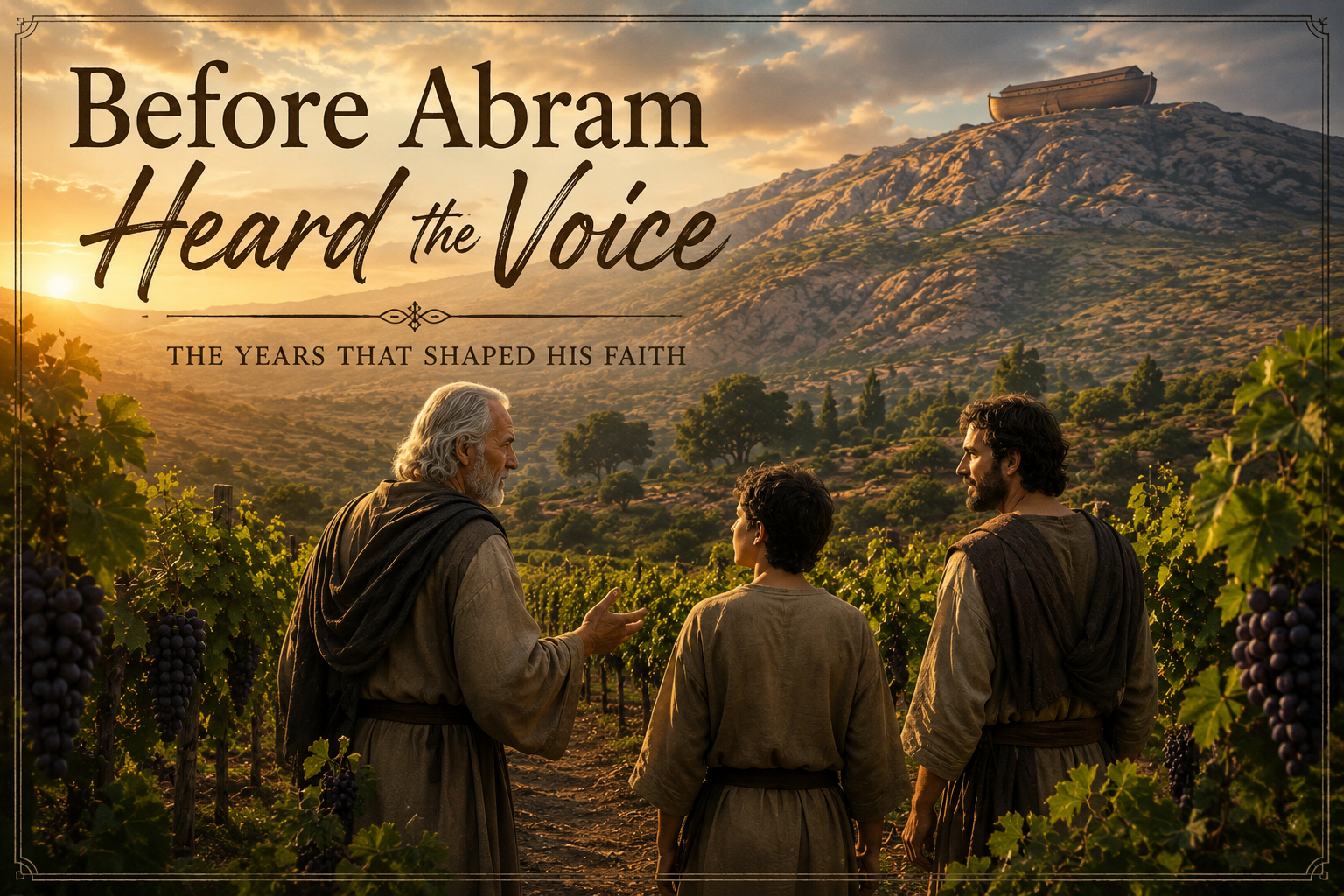
Before Abram Heard the Voice
This week’s His-Story reflection is a little different.
Imagine a young boy, born into an pagan household, welcomed into the home of Noah and his son, Shem. Imagine forty years of shared meals, quiet walks, honest questions, and stories told beside the fire. Whether every detail happened exactly this way, no one can say. But the picture invites us to consider something timeless:
Faith is often formed long before God speaks.
Listen to this week's audio version:
Before Abram Heard the Voice
Before reading this week’s reflection, I invite you to do something a little different.
Rather than opening our Bibles immediately, I invite you to step into the quiet years that Genesis passes over so quickly.
Scripture introduces Abram as a man already prepared to hear the Father’s voice. It tells us where he came from, but says very little about the years that shaped his heart. Ancient Jewish manuscripts preserve a remarkable history that helps fill in those silent years. They tell of a young boy, born into an ungodly household that neither knew nor worshiped the Father, who was welcomed into the home of distant relatives—Noah and his son, Shem.
Whether every detail has been preserved perfectly, I cannot say. But the picture it paints echoes something we have already discovered throughout Genesis.
The Father is always moving toward people.
He sought Adam in the garden.
He protected Cain when no one else would.
He preserved Noah through the flood.
He scattered Babel rather than allowing humanity to destroy itself.
Perhaps it should not surprise us, then, that the next chapter begins with a child finding a place in the home of those who knew the Father well.
Not simply to save his life.
But to share one.
...
For nearly forty years Abram lived among them.
He rose with them in the morning, worked beside them through the day, shared meals around their table, laughed with their family, mourned their losses, and listened as ordinary moments became reminders of an extraordinary Father.
Noah carried the memories of a world that was gone.
Shem carefully preserved the history his father had lived.
Together, they gave Abram something his own household never had.
A place where questions were welcomed.
A table where he belonged.
A home where the Father was more than the subject of ancient stories.
It was not the stories that shaped him.
It was the people who lived them before his eyes.
They gave him a home where the character of the Father was lived before his eyes.
There were hundreds of conversations like these.
These are simply a few that I imagine Abram never forgot.
The Garments
The afternoon sun had begun its slow descent when the day’s work finally gave way to rest. Outside the tents, the women gathered together, laughing quietly as they stitched garments from softened animal hides. Children played nearby, chasing one another through the grass while the smell of fresh bread drifted from the cooking fire.
Abram had always enjoyed sitting near Noah.
The old man rarely hurried. Even in silence there was a gentleness about him that made people want to draw close.
That afternoon, Noah sat with a strip of leather resting across his knees, carefully trimming its edges with a small knife. Abram watched for several minutes before finally asking the question that had been turning in his mind.
“Grandfather... why do we still make garments from skins? Wouldn’t woven cloth be easier?”
Noah smiled but did not answer immediately.
Instead, he ran his weathered fingers across the leather as though remembering something far older than the hide itself.
“The first garments the Father ever made looked much like these.”
Abram looked up.
“For Adam and Eve?”
Noah nodded.
“They had already tried to cover themselves.”
“They sewed leaves together.”
“They hid among the trees.”
He paused.
“But leaves do not hide shame for very long.”
For several moments neither of them spoke.
The laughter of the women continued in the background.
A child squealed with delight somewhere beyond the tents.
Life quietly carried on around them.
Finally Noah spoke again.
“Do you know what I remember most about that story?”
Abram shook his head.
“It was not Adam’s failure.”
“It was not Eve’s deception.”
“It was not even leaving the garden.”
His eyes settled on the unfinished garment lying across his lap.
“It was that the Father went looking for them.”
“They were hiding from Him.”
“But He was not hiding from them.”
Noah lifted the garment into the afternoon light.
“And before they stepped into a world filled with thorns, sorrow, and death... the Father covered them with something made by His own hands.”
A short distance away, Shem had been listening while repairing a leather strap.
“The stories say Adam and Eve had already made coverings for themselves,” he added quietly. “But the Father knew their own covering would not be enough.”
Noah glanced toward his son and smiled.
Then he turned back to Abram.
“The Father did not leave them to carry their shame alone.”
Abram sat silently, watching the old man’s hands.
He had grown up in a household where men shaped gods with their own hands.
Here, he was hearing of a Father whose hands had shaped a covering for His frightened children.
Long afterward, Jesus would tell of another father who answered the shame of a returning son by calling for the finest robe.
But on that afternoon, Abram knew only that the Father had gone looking for those who were hiding from Him.
After a long while Noah rested one gentle hand upon the boy’s shoulder.
“Watch carefully, son.”
“The Father is always like this.”
The Door
Years passed.
The questions changed as Abram grew, but the conversations never seemed to end.
One cool morning, Noah, Shem, and Abram were repairing a section of fencing along the edge of the pasture. Beyond the fields, the weathered timbers of the ark could still be seen resting far above them against the mountainside. Time had darkened the wood, but nothing could erase the memories it carried.
Abram had looked at the great vessel a thousand times.
That morning, he finally asked.
“Grandfather... what was the hardest day?”
Noah kept working.
He drove the wooden mallet against the fence post once...
then again.
Only after the third strike did he answer.
“It was not building the ark.”
Another strike.
“It was not gathering the animals.”
He stopped.
Resting both hands on the handle of the mallet, he looked toward the massive hull in the distance.
“It was the day the Father shut the door.”
The words hung between them.
Abram waited.
He had learned that Noah never hurried a story.
“There were people outside that door whom I knew.”
A long silence.
“Friends.”
Another silence.
“Neighbors... even members of my own family.”
His voice became quieter.
“Children.”
Abram had never heard Noah speak this way.
The old man’s eyes never left the ark.
“I wanted to open that door.”
The confession came almost as a whisper.
“But I could not.”
Noah drew a slow breath.
“The Father had spoken.”
“And after all the years I had walked with Him...”
He paused.
“...I had learned to trust His heart, even when I could not understand His ways.”
Shem had stopped working.
For a moment he simply watched his father, as though he had seen that same grief return many times before.
“My father carried that day for the rest of his life,” Shem said softly.
Noah looked toward him.
Their eyes met, and nothing more needed to be said.
Then Noah turned back to Abram. His eyes were moist, but peaceful.
“Never mistake trust for the absence of sorrow.”
“The Father grieves more deeply than we ever will.”
Many generations later, the Father’s Son would stand outside the tomb of a friend and weep, even though resurrection was only moments away.
Knowing how the story ends does not make sorrow unreal.
Trust does not silence grief.
Sometimes it simply gives us someone to trust while we grieve.
Noah rested a hand on the young man’s shoulder.
“Watch carefully, son.”
“The Father is always like this.”
The Walk
There were mornings when no stories were told at all.
The work itself became the conversation.
One cool morning, Noah, Shem, and Abram walked the edge of the pasture together while the sheep grazed quietly nearby. Dew still clung to the grass, and the rising sun cast long shadows across the hills. The only sounds were birds greeting the morning and the occasional bleat of a lamb wandering too far from its mother.
Abram had learned to enjoy these quiet walks.
Neither Noah nor Shem seemed uncomfortable with silence.
In fact, some of the greatest lessons they shared were never spoken until long after the silence had done its work.
After a while Abram asked, “Grandfather... did the Father always speak to Adam?”
Noah smiled.
“I do not know.”
Abram looked surprised.
“You don’t?”
The old man chuckled.
“No.”
“Those stories passed through many generations before they reached me. Some things were remembered clearly. Other things belonged only to Adam and the Father.”
They continued walking for a few moments before Noah spoke again.
“But I remember what my grandfather used to tell us.”
“Enoch?” Abram asked.
“Yes.”
A smile crossed Noah’s face at the sound of his grandfather’s name.
“He often said that walking with the Father was not about keeping pace.”
Abram waited.
Noah laughed softly.
“When I was a boy, I thought he was talking about his feet.”
He shook his head with a smile.
“It took me many years to realize...”
“...he was talking about his heart.”
Shem smiled.
“Father told me that story when I was young too.”
“And did you understand it?” Abram asked.
“Not at first,” Shem answered. “Some truths have to be walked before they can be understood.”
The three continued along the edge of the pasture.
Finally Noah spoke again.
“The Father did not create mankind simply to give them work to do.”
“He created them because He simply wanted to be with them.”
Abram looked across the fields before asking quietly, “Is that why He came looking for Adam?”
Noah nodded.
“Yes.”
“He was not merely looking for a man.”
“He was looking for His friend.”
The words lingered in the cool morning air.
Centuries later, the Father’s Son would walk dusty roads with His disciples and call them His friends.
He would eat with them.
Rest beside them.
Listen to their questions.
Correct them when they misunderstood.
And remain near even when they failed Him.
After a long silence Abram asked one more question.
“Do you think the Father still walks with us?”
Noah stopped and looked at the young man beside him.
His eyes twinkled.
“Who do you think has been walking with us all morning?”
Abram instinctively glanced around the pasture.
Noah could not help but laugh.
Shem smiled and placed a hand on Abram’s shoulder.
“You will spend much of your life discovering this,” he said.
Noah nodded.
“The Father is often closest when we become quiet enough to notice.”
Abram smiled with them, but something inside him quietly shifted.
In the house where he had been born, gods were shaped by human hands and kept upon shelves.
Here, the Father could not be contained.
He walked through pastures.
He shared ordinary mornings.
And somehow, Abram was being welcomed into that walk.
They continued along the pasture.
Nothing remarkable happened that morning.
The sheep continued grazing.
The birds continued singing.
The wind whispered through the trees just as it always had.
It was, by every outward measure, an ordinary day.
Yet Abram would remember it for the rest of his life.
For the first time, he began to understand that the Father’s greatest desire was not merely to be obeyed...
It was to walk with His children.
Noah rested a gentle hand upon Abram’s shoulder.
“Watch carefully, son.”
“The Father is always like this.”
The Vineyard
The vineyards had become one of Noah’s favorite places.
Perhaps it was because vines required patience.
You could not hurry them.
Some branches reached eagerly toward the sun. Others sagged beneath their own weight and trailed along the ground.
Noah never discarded a branch merely because it had fallen low.
He would bend carefully, lift it from the earth, and secure it where it could receive the light again.
“A vine cannot bear fruit while it lies buried in the dust,” he once told Abram. “Sometimes it does not need to be cut away. Sometimes it simply needs someone to lift it.”
Years later, Jesus would describe His Father as a gardener who tended every branch so that it might bear fruit.
Abram often joined Noah and Shem among the vines.
The work was simple enough that conversation came easily. They walked the rows together, tying new growth to the stakes, lifting fallen branches from the soil, trimming away what hindered healthy growth, and quietly enjoying one another’s company.
On one such morning, Noah stopped beside a vine heavy with clusters of deep purple grapes.
A smile crossed his face.
Abram noticed.
“You always smile when we come here.”
Noah chuckled.
“I suppose I do.”
“Were vineyards always your favorite?”
The old man laughed softly.
“No.”
“They used to remind me of one of my greatest failures.”
Abram looked surprised.
“I have never heard that story.”
“No,” Noah answered. “Most people would rather remember the ark.”
A few rows away, Shem looked up from the vine he was tending.
“I remember both.”
Noah turned toward him.
“And I am thankful for both,” Shem continued.
“The ark reminds me of what the Father can preserve.”
He looked down at the vine in his hands.
“The vineyard reminds me of what the Father can restore.”
Noah held his son’s gaze for a moment, then nodded.
He reached out and gently turned a cluster of grapes in the morning light.
“After the flood, I planted my first vineyard.”
“It seemed like the beginning of a new world.”
His smile faded just a little.
“But one evening, I drank far more of its fruit than wisdom would have allowed.”
Abram remained quiet.
He knew enough to let Noah finish in his own time.
“I dishonored myself.”
“My family witnessed a shame I wish they had never seen.”
The old man sighed.
“I had survived the flood.”
“I had walked with the Father for centuries.”
“And yet...”
He looked down at his hands.
“...I discovered that the flood had washed the earth.”
“It had not washed away every weakness inside of Noah.”
The three resumed walking.
Only the sound of their sandals brushing the grass broke the silence.
Finally Abram asked, “Did the Father turn away from you?”
Noah stopped.
“Never!”
His answer came without hesitation.
“No more than He turned away from Adam.”
“No more than He turned away from Cain.”
“No more than He turned away from me when I stood inside the ark wondering if I could ever bear the weight of what had happened.”
His eyes met Abram’s.
“The Father has never loved perfect people.”
“If He had...”
A gentle smile returned.
“...He would have had no one to love.”
Abram could not help but smile.
Neither could Noah.
Shem shook his head, but he was smiling too.
Abram looked down at the branch Noah had lifted from the dirt only moments earlier.
He had seen gods discarded when they cracked.
He had seen idols thrown away when they no longer pleased their owners.
But the Father Noah described did not discard His children when they fell.
He bent low.
He lifted them from the dust.
He placed them where they could stand in the light again.
Then Noah rested a hand against one of the vines.
“The Father does not abandon His children when they stumble.”
“He teaches them to stand again.”
He looked toward Abram.
“Watch carefully, son.”
“The Father is always like this.”
The Stars
The years passed more quickly than any of them expected.
The boy had become a young man.
His questions had grown fewer—not because he had stopped wondering, but because he had learned that many answers were found simply by walking beside those who knew the Father well.
One evening, after the day’s work had ended, Noah, Shem, and Abram climbed a gentle rise overlooking the valley. They often came there when the weather was fair. No one needed to suggest it anymore. It had become one of those quiet traditions that families share without ever speaking about it.
They sat together as the last colors of sunset faded beyond the western hills.
One by one, the stars began to appear.
Then hundreds.
Then thousands.
Soon the heavens stretched from horizon to horizon with more light than Abram could ever hope to count.
Noah looked upward and smiled.
“Your forefather Adam looked upon these same stars.”
Abram followed his gaze.
After a long silence, Noah spoke again.
“So did Eve.”
“And Abel.”
His voice grew softer.
“And Enoch.”
“And many years later... so did we.”
“I remember standing upon the ark after the rain had ended.”
“The air had never seemed so clear.”
“The sky had never seemed so full.”
He paused.
“I remember thinking...”
Another pause.
“...the Father never stopped being faithful.”
None of them spoke for a long while.
There was no need.
The heavens were saying enough.
Finally Shem broke the silence.
“Your children will look upon these same stars someday.”
Abram turned toward him.
Shem continued looking upward.
“The generations change.”
“The Father does not.”
Noah lifted one weathered hand toward the heavens.
“Whenever you find yourself wondering...”
“...look up.”
“The heavens have a way of reminding us who the Father is.”
Abram said nothing.
He simply looked.
He did not know it then, but years later the Father Himself would lead him outside and say,
“Look now toward heaven, and count the stars if you are able to number them.”
When that day came, Abram would not be looking into an unfamiliar sky.
He would remember a lifetime spent beside two faithful men who had shown him the Father’s heart.
He would remember quiet walks.
A place at their table.
Hands that lifted fallen branches.
Stories told without hurry.
A father and a grandfather who had welcomed his questions and shared their lives with him.
Because it was never simply about the stars.
It was about the Father who made them.
And it was not the stories that shaped Abram’s faith.
It was the people who lived them before his eyes.
Conclusion
As I imagine those quiet years, I find myself asking a different question than I once would have.
Not...
“What did Noah and Shem teach Abram?”
But...
“What kind of home did they give him?”
It was a home where the stories of the Father were spoken naturally over meals, during work, while walking through vineyards, and beneath the stars.
It was a home where questions were welcomed.
Where silence was not awkward.
Where failure was confessed honestly.
Where mercy was remembered often.
It was a home where the character of the Father was lived before a young man’s eyes.
Perhaps Abram remembered more than their stories.
Perhaps he remembered what it felt like to be given a place among them.
To be called “son.”
To discover that failure did not mean abandonment.
To learn that the Father did not remain distant upon a shelf, waiting to be served.
He walked with His children.
He covered their shame.
He grieved with them.
He lifted them when they fell.
He led them outside and taught them to look toward heaven.
Perhaps that is how faith has always grown.
Not merely through sermons.
Not merely through books.
But around tables.
Along dusty paths.
Through ordinary conversations.
Beside people whose lives quietly whisper,
“Watch carefully, son.”
“The Father is always like this.”
A Song for This Story
Ryan wrote this song to accompany Before Abram Heard the Voice.