The Father Who Called Him Back

The Father Who Called Him Back
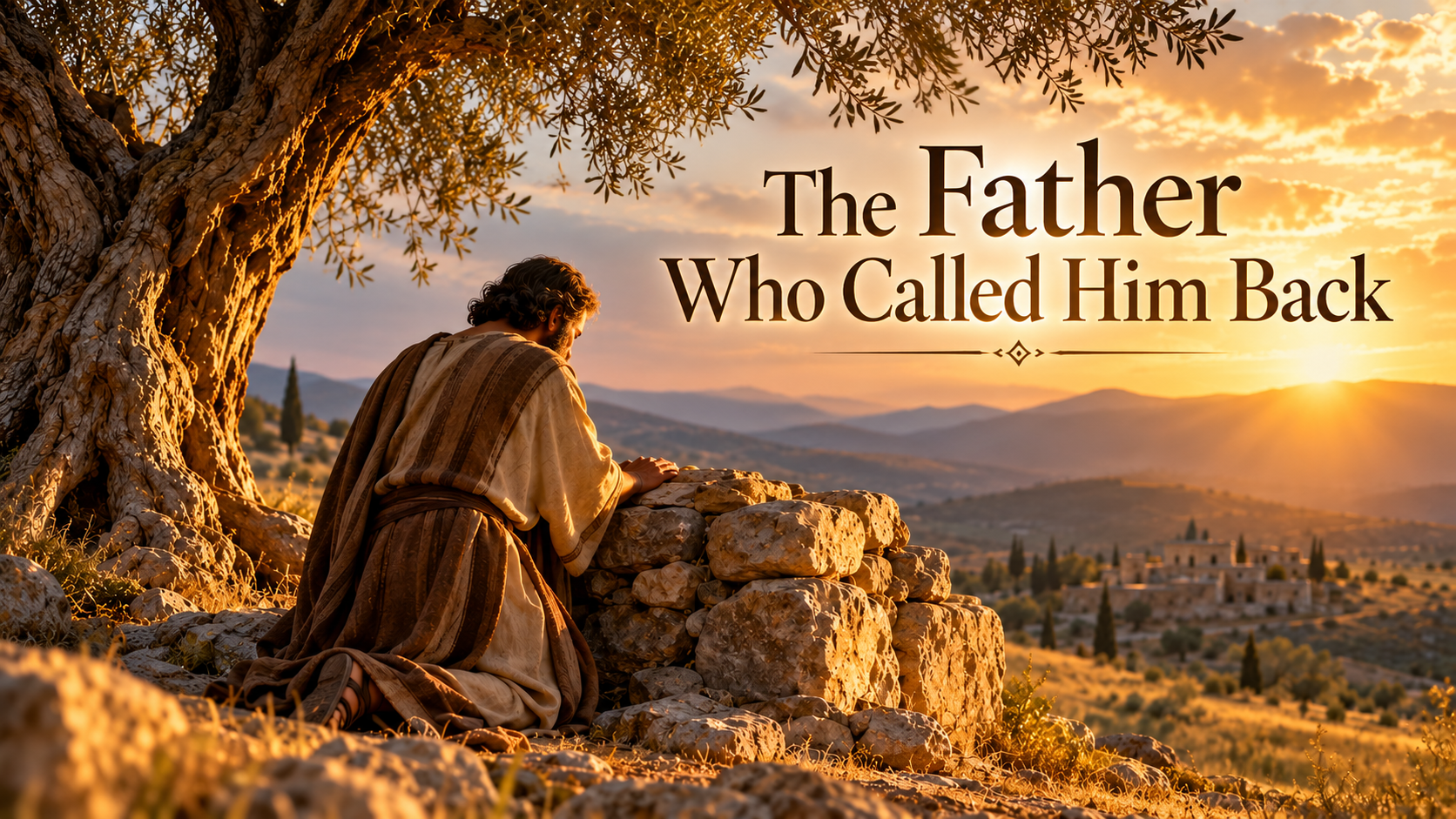
Before You Begin

Before reading this week's His-Story, please take a few minutes to read Genesis chapters 33, 34, and 35.

I know that's more reading than usual, but understanding the whole story is especially important this week. These chapters take us from a beautiful reconciliation between brothers into a deeply disturbing account of deception and violence, and finally to an extraordinary invitation from God.

Please don't skip the difficult chapter in the middle. Without it, we may miss something remarkable about what the Father does next. Read the story as a whole, and keep asking the question that has guided us throughout His-Story: What does this reveal about the Father?

Listen to this week's His-Story

The Father Who Called Him Back

Perhaps one of the most troubling things we discover in Scripture is what happens when people who carry God's name act without reflecting His character.

And sometimes, those people look uncomfortably familiar.

Jacob had encountered God at Bethel, witnessed His faithfulness through twenty difficult years, wrestled with Him beside the Jabbok River, and received a new name: Israel. Yet receiving that name hadn't suddenly transformed every part of his life. And it certainly hadn't made his household a family that consistently reflected the Father's heart.

What happens next is heartbreaking.

When we left Jacob last week, he had experienced an extraordinary reconciliation with Esau. The brother he had feared for twenty years had embraced him and wept with him. It was a beautiful moment, especially considering everything that had happened between them.

Jacob told Esau that he would follow him toward Seir, traveling slowly because of the children and livestock. But Scripture next follows Jacob to Succoth and eventually to Shechem. We don't know whether he intended to visit Esau later, yet it's difficult not to notice how much this resembles the Jacob we've known throughout his life. He had been renamed Israel, but there were still traces of the old Jacob.

Near Shechem, he purchased land and built an altar to God. He hadn't abandoned Yahweh. He was still worshiping the One who had brought him home. But he hadn't returned to Bethel, where God first met him when he was fleeing his brother.

And then something terrible happened.

✦ ✦ ✦

The story continues with the disturbing account of Dinah, Jacob's daughter, and Shechem, the son of a local ruler. The biblical account describes Shechem's treatment of Dinah as a violation. Yet afterward, we're told that he loved her, spoke tenderly to her, and wanted to marry her. There are things about this encounter we simply don't know, and Dinah herself is never given a voice in the account.

Her brothers, however, were furious. In their culture, what had happened was a serious offense against Dinah and her family. Their anger was understandable, but what followed was not.

Jacob's sons told the men of Shechem that their families could join together through marriage, but only if the men agreed to be circumcised. Think about that. Circumcision was the sign of God's covenant with Abraham, representing a family set apart by God and entrusted with His promises. And Jacob's sons used that sacred sign as an instrument of deception.

While the men of the city were recovering, Simeon and Levi attacked and killed them. The other brothers then plundered the city, taking possessions, livestock, women, and children.

They may have believed they were defending their sister and their family's honor, but their actions went far beyond justice. Nowhere does Scripture tell us that God commanded or approved of what they did. In fact, years later, Jacob would condemn Simeon and Levi's violence and anger.

It's a terrible chapter, and perhaps the most disturbing thing is how little these people seem to resemble the God whose promises they carry. They know the covenant, the traditions, and the stories of Abraham and Isaac.

But do they know the Father's heart?

Jacob is frightened. He knows the surrounding peoples may retaliate, and he fears his household could be destroyed. The chapter ends with his sons defending their actions, but there is no resolution, no comforting explanation, and no recorded word from God.

Just a family surrounded by the consequences of terrible choices.

Perhaps you've known something of that feeling. Maybe you've made decisions you wish you could undo, allowed things into your life that never belonged there, or wandered further from the Father's heart than you ever imagined. Sometimes the consequences remain long after the moment has passed, and you wonder what the Father must think of you now.

But the story doesn't end at Shechem.

Yet God...

The next chapter begins with words I find extraordinarily moving.

God spoke to Jacob.

After everything that had happened, after the deception and violence, after the fear and uncertainty, the Father spoke.

"Arise, go up to Bethel and dwell there. Make an altar there to the God who appeared to you when you fled from your brother Esau."

Genesis 35:1

Notice what God said. He didn't simply tell Jacob to move to another town. He reminded him of a moment in their history together.

Twenty years earlier, Jacob had been alone, frightened, and uncertain of his future. He had deceived his father, angered his brother, and fled from everything familiar. He lay down with a stone beneath his head, and there, in the darkness, the Father came to him.

God made an extraordinary promise that night:

"Behold, I am with you and will keep you wherever you go, and will bring you back to this land. For I will not leave you until I have done what I have promised you."

Genesis 28:15

And He had kept His promise. Jacob had returned to Canaan with a large household, substantial possessions, and the unexpected blessing of reconciliation with his brother.

But Jacob had not yet returned to Bethel.

There's an interesting contrast with Abraham. After his difficult experience in Egypt, Abraham returned to the place where he had previously built an altar, between Bethel and Ai, and there he called upon the name of the LORD.

Abraham returned to the altar. Jacob's story was different.

The Father called Jacob back.

And there's something profoundly tender in that distinction. The Father didn't wait for Jacob to remember the way. He didn't wait until Jacob's household had everything straightened out. He reminded Jacob of the place where they had first met, when Jacob was frightened and running from the consequences of his own choices.

Now, after another terrible chapter in his family's history, the Father was calling him back again.

Not because the things that had happened no longer mattered, or because God had overlooked the violence and deception. But because His relationship with Jacob was not finished.

Jacob may have lost his way, but the Father had never lost sight of Jacob.

✦ ✦ ✦

What happens next reveals just how far Jacob's household had drifted. Jacob tells his family:

"Put away the foreign gods that are among you and purify yourselves and change your garments."

Genesis 35:2

Foreign gods, in the household of Abraham's grandson.

This was the family that carried the promises of Yahweh. They had witnessed His protection, provision, and faithfulness, yet somehow other gods had found a place among them. Years earlier, Rachel had stolen her father's household gods. We don't know whether those particular idols were still present, but clearly the household had not remained free of them.

And yet, notice the order of events.

The Father called Jacob before the idols were removed. Before the household purified itself or changed its garments, God's invitation had already come.

And Jacob responded.

There's a beautiful principle here that we also find in Paul's words to the Romans: God's kindness is meant to lead us toward repentance. The Father's gracious initiative doesn't make change unnecessary. It gives us a reason to respond.

The family surrendered its foreign gods and earrings, and Jacob buried them beneath a tree near Shechem. Scripture doesn't explain why he buried them rather than destroying them, but in that moment the household was leaving them behind.

Then Jacob said something beautiful:

"Let us arise and go up to Bethel, so that I may make there an altar to the God who answers me in the day of my distress and has been with me wherever I have gone."

Genesis 35:3

After everything, Jacob could still look back and recognize the Father's faithfulness. He remembered the God who had answered him in distress, the God who had accompanied him through twenty difficult years, the God who had never abandoned him.

Jacob had not always been faithful, but the Father had.

✦ ✦ ✦

As Jacob and his household traveled toward Bethel, a terror from God fell upon the surrounding cities, and no one pursued them. Jacob had feared retaliation for his sons' violence, yet the Father protected them on their journey.

That protection did not mean God approved of what happened at Shechem. But the family's failures had not brought an end to His faithfulness.

At Bethel, Jacob built an altar, and God appeared to him again. Once more, the Father spoke the name Israel over him and renewed the promises made to Abraham and Isaac. Nations and kings would come from his descendants, and the land promised to his fathers would belong to those who came after him.

The Father wasn't merely reminding Jacob of something that happened twenty years earlier. He was reminding him that their story wasn't finished. His purposes extended beyond Jacob's lifetime, beyond his failures, and beyond the failures of his household.

Centuries later, Paul would write:

"If we are faithless, he remains faithful—for he cannot deny himself."

2 Timothy 2:13

Those words were written in a different setting, and they are not a promise that our choices have no consequences. But they remind us of something we've been discovering throughout Genesis: the Father's faithfulness is rooted in who He is, not in our ability to live without failure.

The promise to Jacob was still alive because the One who made it was still faithful.

✦ ✦ ✦

I wonder whether some of us have a Bethel somewhere in our memories.

Not necessarily a physical place, but a time when we first began to recognize the Father's presence. Perhaps it was a season when trust seemed simpler, when we were discovering His love and beginning to understand that He was far more gracious than we had ever imagined.

But life happened. We made mistakes, experienced disappointments, and sometimes failed in ways we never expected. Perhaps we became distracted or allowed other things to occupy places in our hearts that once belonged to Him. And somewhere along the way, the closeness we once knew seemed to fade.

Maybe you've looked back on those earlier days and wondered whether you could ever know the Father that way again.

I don't want to suggest that our failures don't matter. They do. Sometimes they leave wounds that take years to heal, and sometimes they affect people who never deserved the pain we caused. The Father doesn't ask us to pretend otherwise, and His faithfulness doesn't excuse our wrongdoing.

But neither does He abandon us to the worst chapters of our lives.

Think about Jacob. The Father knew the entire story. He knew about the deception, the violence, the fear, and the idols. He knew how far this family had wandered from the character of the God whose promises they carried.

And still, He called Jacob back.

Not simply to a place on a map, but to the place where Jacob could remember the One who had been with him all along.

I think that's what makes this story so moving. Jacob didn't have to convince the Father to remember their relationship. He didn't have to remind God of the promises made beneath the stars twenty years earlier.

The Father remembered.

Perhaps your Bethel feels like a distant memory. Perhaps too much has happened, and you wonder whether the relationship you once knew can ever be restored. Or perhaps you've spent years knowing about God, while quietly longing to know Him more deeply.

The invitation to Jacob reminds us that the Father's faithfulness does not end where our faithfulness fails. His call is not an invitation to pretend the past never happened, but to come toward Him with all the unfinished places in our lives.

Abraham found his way back to the altar. Jacob needed the Father to call him.

And perhaps that's the most beautiful thing we've discovered this week.

Even when Jacob had not returned to the place where he first met God, the Father had not forgotten where to find him.

And perhaps the Father who called Jacob back is calling you, even now, to know Him more deeply.

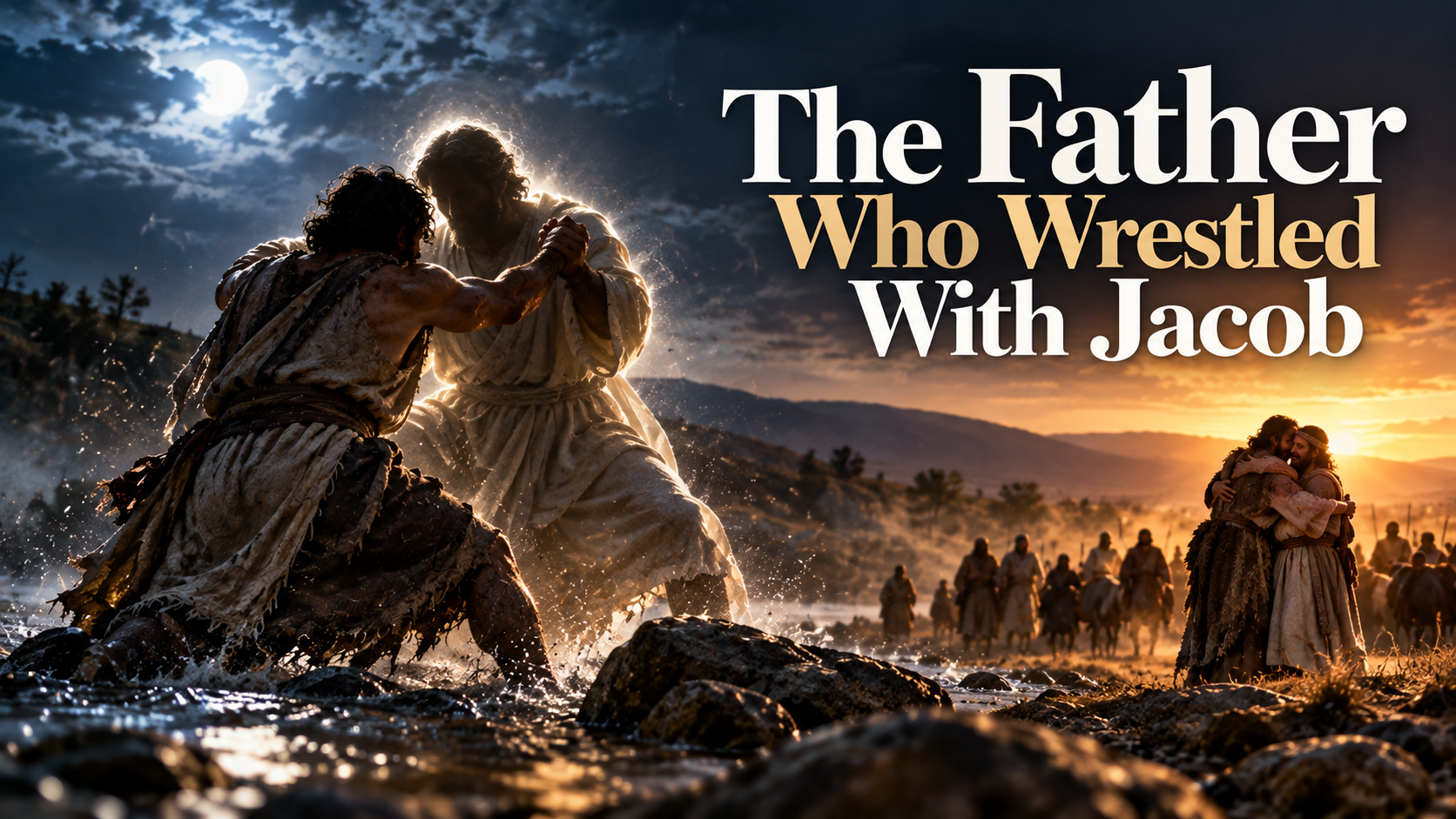
The Father Who Wrestled With Jacob

The Father Who Wrestled With Jacob

The Father Who Wrestled With Jacob

Before reading this week's reflection, I encourage you to read Genesis 32:22–33:20. We visited part of this story last week, but this time I want us to consider it from a different perspective. Rather than concentrating on Jacob's desperate struggle, consider the One who came to meet him. Why would the Father wrestle with a frightened man? And what might Jacob discover about Him before the sun rose?

The Father Who Wrestled With Jacob

Jacob was alone.

Across the Jabbok River were his wives, children, servants, and everything he possessed. Somewhere ahead was Esau, the brother who had once threatened to kill him, now approaching with four hundred men.

Jacob had done everything he knew to do. He had divided his household, sent gifts ahead, and pleaded with God to remember His promises. Now there was nothing left to arrange.

And in the darkness, someone came to wrestle with him.

Genesis initially calls this mysterious visitor a man. But Jacob will later declare that he has seen God face to face, and the prophet Hosea describes the encounter as Jacob struggling with God and with an angel (Hosea 12:3–4).

Somehow, in a mystery Scripture never fully explains, Jacob has encountered God.

But notice something remarkable. Jacob didn't go looking for God that night.

God came to him.

Jacob was frightened, exhausted, and uncertain of what the morning would bring. He had already prayed. And now, when he was finally alone, the Father came to meet him.

But why wrestle?

Why not speak words of reassurance, as He had at Bethel? Why not simply tell Jacob everything would be all right? We aren't told.


They wrestled through the night. Then, with a simple touch, the mysterious visitor dislocated Jacob's hip.

A touch.

After hours of wrestling, a single touch was enough to leave Jacob wounded. Whatever else we may not understand, this was no contest between equally matched opponents. The One who could disable Jacob with a touch had allowed the struggle to continue.

Perhaps the struggle itself was part of what the Father wanted Jacob to experience.

Jacob had spent much of his life struggling—with his brother, his father, and Laban. Struggling for blessings, for a family, and for a future. And now he was wrestling with God.

But this time, he wasn't trying to take something from another man. He was holding on to the One from whom blessing comes.

When the mysterious visitor told Jacob to release him, Jacob refused.

“I will not let You go unless You bless me!”
GENESIS 32:26

Hosea adds a detail Genesis leaves unspoken. Jacob wept and sought favor.

I wonder what those tears carried. Fear for his family? Regret over the past? Exhaustion from years of struggling? Desperation to know that the God who had accompanied him would not abandon him now?

We cannot know everything Jacob felt, but we know he was pleading. And the Father did not turn him away.

Instead, He asked a question.

“What is your name?”

“Jacob.”

Years earlier, when Isaac asked who stood before him, Jacob had answered with his brother's name.

“I am Esau your firstborn.”

Now, beside the Jabbok, he was asked his name again. And this time he answered, “Jacob.”

Was the question intended to confront Jacob with his past? Scripture doesn't say. But the contrast is difficult to miss.

Then came an extraordinary declaration.

“Your name shall no longer be called Jacob, but Israel; for you have struggled with God and with men, and have prevailed.”
GENESIS 32:28

Israel.

The name carries the language of struggling or striving with God, although its precise meaning has been understood in more than one way.

The Father gave Jacob a new name. Not because he had conquered his fears or become a man without weaknesses. He was still frightened. His family was still in danger, as far as he knew. And now his hip was injured.

Yet God blessed him.


And that raises another question.

Why wound him?

Jacob had begged for a blessing, and he received one. But he also received a wound.

We might be tempted to explain it by saying God needed to humble Jacob or teach him dependence. Perhaps there is some truth in those possibilities. But Genesis doesn't give us that explanation, and I don't want to put words into the Father's mouth.

What we do know is that Jacob would walk differently after this night. The man who had spent his life running, bargaining, and struggling would now approach his brother with a limp.

And perhaps that limp would forever remind him of something extraordinary. He had wrestled with God, and he had survived.

Jacob asked the mysterious visitor for His name, but received another question instead.

“Why is it that you ask about My name?”

Then He blessed him.

Jacob named the place Peniel, meaning the face of God.

“For I have seen God face to face, and my life is preserved.”
GENESIS 32:30

Jacob had known about God all his life. He had heard the stories of Abraham and Isaac. He knew the promises. At Bethel, the Father had spoken directly to him. And for twenty years, Jacob had experienced His faithfulness.

But now he could say something he had never said before.

He had seen God face to face.

I wonder whether that was the greatest blessing of the night. Not the new name. Not the assurance of protection. But the encounter itself.

The Father had come near enough for Jacob to hold on to Him.

And when the sun rose, Jacob walked away limping.


Then he looked up.

Esau was coming.

Four hundred men were approaching, just as the messengers had warned. Whatever Jacob had experienced during the night, he still had to face his brother.

He arranged his family and went ahead of them, bowing repeatedly as he approached Esau. Twenty years had passed since Jacob fled for his life, and now the brother he feared was standing before him.

But Esau did something Jacob could hardly have expected.

He ran toward him.

Not with a sword. Not with an accusation.

He ran to embrace him.

Esau threw his arms around Jacob's neck, kissed him, and they wept together. The man Jacob had feared for twenty years was holding him in his arms.

And Jacob said something extraordinary.

“For indeed I have seen your face as though I had seen the face of God, and you were pleased with me.”
GENESIS 33:10

During the night, Jacob had encountered God face to face. Now, in the morning, he looked into the face of the brother he had wronged and saw something that reminded him of God's face.

Welcome. Acceptance. Mercy he had not known how to expect.

It reminds me of another story Jesus would tell centuries later. A son who had squandered his inheritance returned home, uncertain of how his father would receive him.

But while he was still a long way off, his father saw him, ran to him, embraced him, and kissed him (Luke 15:20).

The stories are not identical. Esau is a brother, not a father, and Genesis doesn't tell us that Esau's embrace was a direct act of divine intervention. But the resemblance is beautiful.

A frightened man approaches someone he has wronged. And instead of the rejection he fears, he finds an embrace.

Could it be that Jacob recognized something of the Father's heart in the face of his brother?

Jacob himself seems to invite that question. He had seen the face of God during the night, and now he was speaking of seeing God's face again.

For twenty years, Jacob had experienced God's provision and protection. He had accumulated the blessings of family, livestock, and possessions.

But knowing that God provides is not quite the same as knowing the heart of the One who provides. Knowing the promises is not quite the same as knowing the Father who made them.

Jesus would one day describe eternal life in these words:

“And this is eternal life, that they may know You, the only true God, and Jesus Christ whom You have sent.”
JOHN 17:3

To know Him.

Not simply to know about Him. Not merely to receive His gifts. But to know the Father Himself.

We began with a question. Why would the Father come to wrestle with Jacob?

We still don't know exactly why He chose that strange encounter, or why He left Jacob with a wounded hip.

But we do know that the Father came. He did not wait for Jacob to become fearless or to understand everything. He met him in the darkness, allowed him to struggle, heard his pleading, and blessed him.

And when morning came, Jacob discovered that the brother he feared was coming to embrace him.

Jacob entered that night carrying the weight of his past and the fear of his future. He left with a wound, a blessing, and a new name. And perhaps, more importantly, with a deeper knowledge of the One who had promised never to leave him.

The greatest blessing of that night may not have been something the Father gave Jacob.

Perhaps the greatest blessing was that the Father gave Jacob an encounter with Himself.

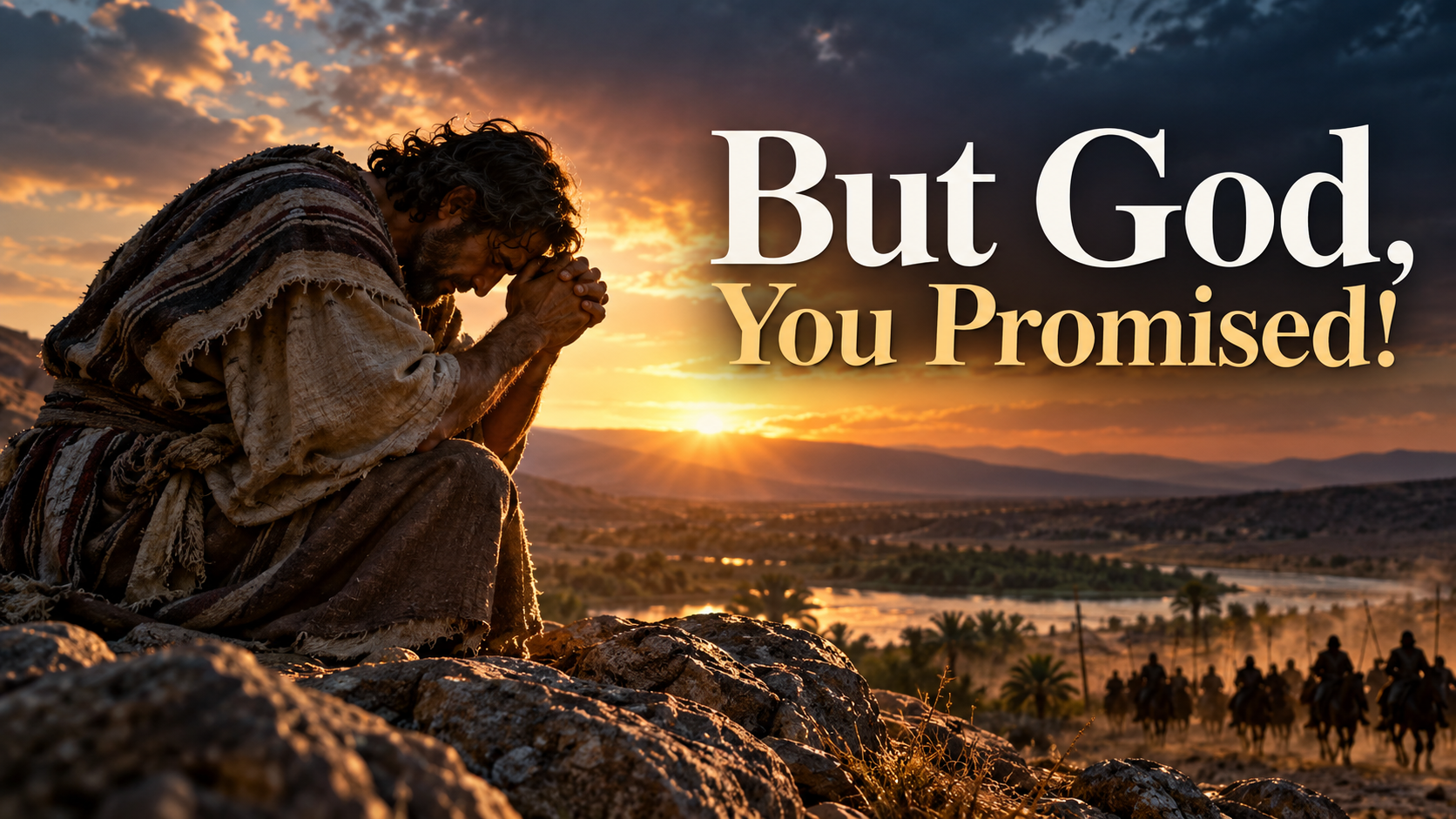
But God, You Promised!

But God, You Promised!

But God, You Promised!

Before reading this week's reflection, I encourage you to read Genesis chapter 32. As you read, pay particular attention to Jacob's prayer, his fear, and the extraordinary encounter that follows. And consider the question we've been asking throughout His-Story: What does this reveal about the Father?

But God, You Promised!

Twenty years have passed since Jacob fled his father's household. He left with little more than his staff, carrying the consequences of his deception and the memory of a brother who wanted him dead.

But the Father had met him at Bethel. There, beneath the stars, God promised to be with him, to protect him wherever he went, and to bring him safely home. And for twenty years, the Father had been faithful.

Jacob now had wives, children, servants, and enormous flocks. He had endured Laban's deception, years of exhausting labor, and countless uncertainties. Yet through it all, the Father had provided for him.

Now Jacob was going home.

And something extraordinary happened along the way.

Scripture tells us that angels of God met him. That's all we're told. No message is recorded. No explanation is given. Jacob simply recognizes their presence and declares, “This is God's camp!” He names the place Mahanaim, a name associated with two camps.

Ancient Jewish interpreters imagined that angels who had accompanied Jacob during his years away were now being met by angels welcoming him home. Scripture doesn't tell us that this happened, but it's a beautiful picture.

When Jacob left home, angels appeared to him at Bethel. Now, as he returns, angels meet him again. The Father who promised to accompany Jacob had never stopped watching over him.


But almost immediately, Jacob receives terrifying news.

He has sent messengers ahead to his brother Esau, hoping to find favor with him. When they return, they report that Esau is coming to meet him.

With four hundred men.

Imagine hearing those words.

The last time Jacob saw Esau, his brother was planning to kill him. Twenty years have passed, but Jacob has no assurance that Esau's anger has faded. And now four hundred men are approaching.

Jacob isn't traveling alone. He has wives, children, servants, and flocks spread across the countryside. Everything he has spent twenty years building is with him. And suddenly, he fears losing it all.

There's something especially painful about Jacob's situation. The promise he carries didn't begin with him.

God promised Abraham that his descendants would become a great nation. He repeated that promise to Isaac. Then, at Bethel, He promised Jacob that his descendants would spread across the earth and that He would bring him safely home.

Abraham never lived to see that nation established. Neither did Isaac. As Hebrews 11 later reminds us, the patriarchs lived by faith without seeing the complete fulfillment of everything God had promised.

Now Jacob stands with the beginnings of that promised family surrounding him, while the brother who once threatened his life approaches with four hundred men.

What happens to the promise if Esau destroys his family?

Jacob divides his household into two camps, hoping that if one is attacked, the other might escape. And then he prays.

This is not the prayer of a man who has everything figured out. He begins by remembering the God of Abraham and Isaac, the God who told him to return home and promised to be with him.

Then he acknowledges something remarkable.

“I am not worthy of the least of all the mercies and of all the truth which You have shown Your servant.”
GENESIS 32:10

Jacob remembers crossing the Jordan with only his staff. Now he has become two camps. He recognizes that everything he possesses has come through the Father's kindness and faithfulness.

The Hebrew words behind his prayer speak of steadfast love and faithfulness. Generations later, when God reveals His character to Moses, He describes Himself as abounding in those very qualities (Exodus 34:6). Jacob was already discovering, through twenty years of experience, what the Father would later declare about Himself.

But then Jacob admits his fear.

“Deliver me, I pray, from the hand of my brother, from the hand of Esau; for I fear him.”
GENESIS 32:11

There is no pretending to be brave. Jacob is frightened.

And then he says something that has always moved me.

“But You said, ‘I will surely treat you well, and make your descendants as the sand of the sea, which cannot be numbered for multitude.’”
GENESIS 32:12

But You said.

But God, You promised!

Can you hear the desperation?

Jacob isn't simply asking God to bless his plans. He's appealing to the very words God spoke to him.

You told me to come home. You promised to be with me. You promised that my descendants would become a multitude. And now everything seems about to be destroyed.

What are we supposed to do when the circumstances of our lives seem to contradict what we believe God has promised?

Perhaps you've stood in that place. You believed you understood what the Father was doing. You trusted Him. You moved forward. And then something happened that seemed impossible to reconcile with His faithfulness.

You prayed. You questioned. Perhaps you even cried out in frustration.

But God, You promised!

There's a remarkable pattern in Scripture of people appealing to God in this way. Abraham stood before the LORD and pleaded for Sodom, asking whether the Judge of all the earth would do what was right (Genesis 18:25). Moses appealed to God's promises when Israel faced destruction after the golden calf (Exodus 32:11–13). And now Jacob is pleading with the Father who has accompanied him for twenty years.

The remarkable thing is that Scripture doesn't portray these conversations as though God is too fragile to hear them. The Father allows His people to speak. He listens to their fears, their questions, and their desperate appeals.


Jacob sends gifts ahead to Esau, hoping to soften his brother's anger. He arranges his household, moves his family across the Jabbok River, and prepares for the encounter he has dreaded for twenty years.

And then, in the darkness, Jacob is alone.

What happens next is one of the strangest encounters in all of Scripture.

“A Man wrestled with him until the breaking of day.”
GENESIS 32:24

At first, Genesis simply calls this mysterious visitor a man. But as the story unfolds, we discover that Jacob is wrestling with someone far greater than an ordinary human being. Jacob will eventually declare that he has seen God face to face. Centuries later, the prophet Hosea will describe this same encounter as Jacob struggling with God and with an angel (Hosea 12:3–4).

Somehow, in a way Scripture never fully explains, God has come to meet Jacob in the darkness.

And notice something easily overlooked. Jacob didn't go looking for someone to wrestle. The mysterious visitor came to him. The Father who had promised to accompany Jacob was not watching this desperate night from a distance. He had come near enough to wrestle.

And through the darkness, they struggled. Hour after hour.

At some point, the mysterious figure touched Jacob's hip, leaving it injured. Yet Jacob refused to release him.

“I will not let You go unless You bless me!”
GENESIS 32:26

There's something extraordinary about that declaration. Jacob has spent much of his life struggling to obtain blessings. He bargained for his brother's birthright. He deceived his father to receive a blessing. He worked for years to build a household and accumulate wealth.

But now, with everything he possesses seemingly threatened, Jacob is holding on to the One from whom blessing truly comes.

Centuries later, Hosea remembered this encounter and added a detail Genesis doesn't mention. Jacob wept and sought favor.

Think about that.

The man who had struggled and schemed through so much of his life is now weeping, pleading, and refusing to let go. This wasn't simply a contest of physical strength. It was an encounter filled with desperation.

And somehow, Jacob prevailed.

The mysterious figure asked his name.

“Jacob.”

Then came the words that would change how he was known.

“Your name shall no longer be called Jacob, but Israel; for you have struggled with God and with men, and have prevailed.”
GENESIS 32:28

Jacob asked for his opponent's name, but received no answer. Instead, he received a blessing.

He named the place Peniel, saying that he had seen God face to face and his life had been preserved. And as the sun rose, Jacob walked away limping.

The danger had not disappeared. Esau was still approaching with four hundred men. Jacob still had to face the brother he had deceived.

But something had happened during the night.

He had encountered God.

And the Father had blessed him.

I wonder how often we assume that God's faithfulness means our circumstances will unfold the way we expect. Jacob had God's promise, but he didn't know how that promise would survive the approaching danger. He knew what God had said. He didn't know what God would do next.

And perhaps that's where many of us find ourselves. We know the words of Scripture. We remember the Father's faithfulness in years gone by. But when fear overwhelms us, we struggle to imagine how He could possibly remain faithful through what lies ahead.

Yet the Father who met Jacob at Bethel was the same Father who had watched over him for twenty years. The same Father whose angels met him on the road. And the same Father who met him in the darkness beside the Jabbok.

Jacob was about to discover that the Father's faithfulness was greater than his ability to understand it.

The sun was rising. Jacob was limping. And somewhere ahead, Esau was waiting.

But the Father had not abandoned His promise.

And next week, we'll return to that extraordinary night beside the Jabbok, not simply to consider the man who refused to let go, but to ask an even more remarkable question.

What does it reveal about the Father that He was willing to wrestle with Jacob in the first place?

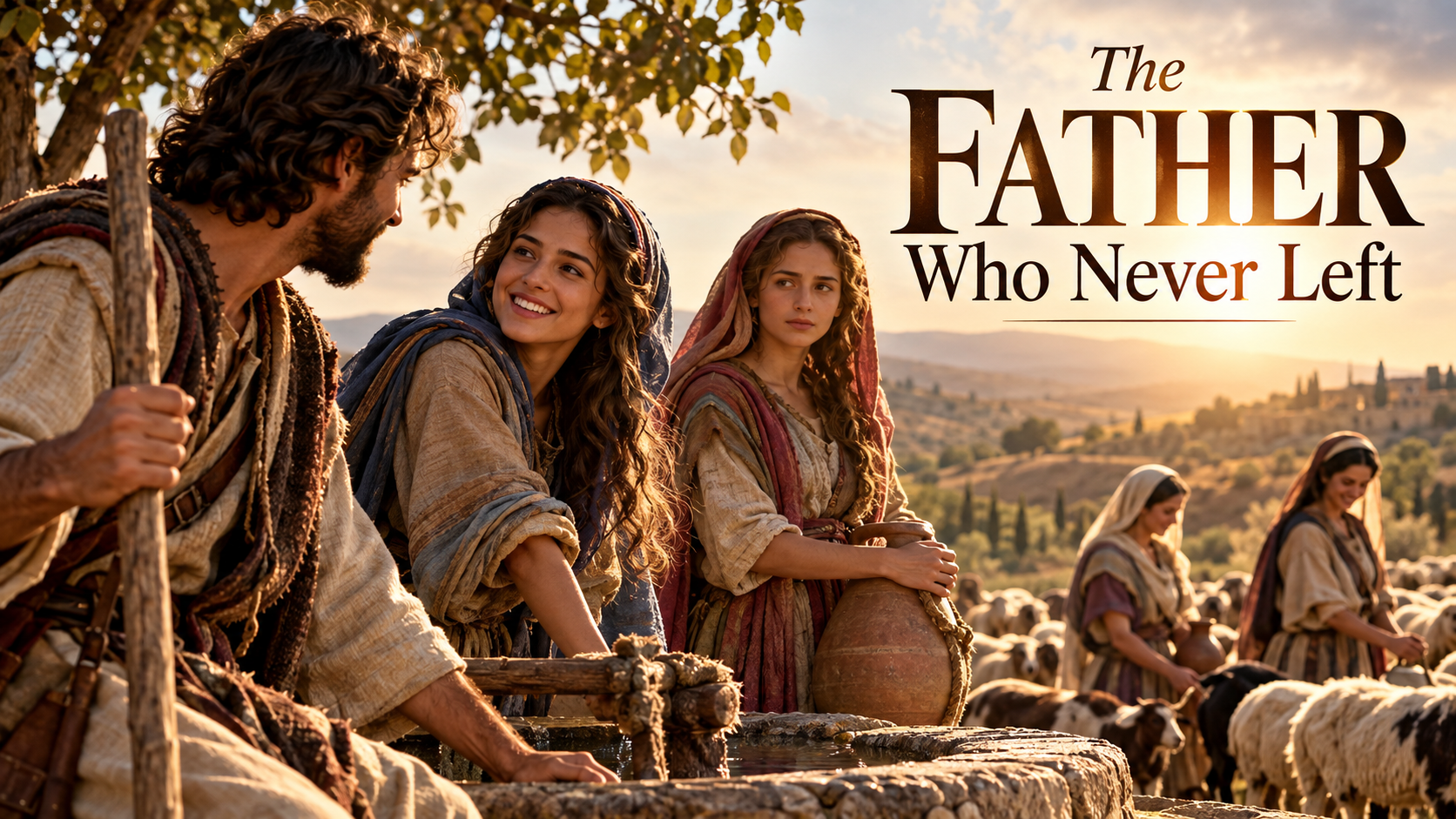
The Father Who Never Left

The Father Who Never Left

Before reading this week's reflection, I encourage you to read Genesis chapters 29 through 31. These chapters take us through twenty years of Jacob's life, years filled with love, disappointment, deception, family struggles, and unexpected blessings. There's far more here than we can explore together, but woven through it all is something beautiful about the Father.

The Father Who Never Left

When we last saw Jacob, he was sleeping beneath the stars at Bethel. He had fled his father's household, carrying little more than his staff and the consequences of his deception. Yet there, alone in the wilderness, the Father appeared and promised, “I am with you and will watch over you wherever you go.”

Jacob responded with a promise of his own. If God would accompany him, provide for his needs, and bring him safely home, then the LORD would be his God.

Now Jacob continues his journey, and the next twenty years will give him plenty of opportunities to discover what those promises mean.

He arrives at a well, meets a beautiful young woman named Rachel, and falls deeply in love. He agrees to work seven years for her father, Laban, in exchange for her hand in marriage. Scripture tells us those seven years seemed like only a few days because of his love for her.

Imagine the anticipation as the wedding finally arrives. Seven years of waiting, seven years of working, and at last Rachel would be his wife.

But when morning comes, the woman beside him is not Rachel. It's her older sister, Leah.

Laban has deceived him.

And there's an irony here that's difficult to overlook. Jacob, the younger son who deceived his father to receive the blessing intended for the firstborn, has now been deceived by a man who insists that the firstborn daughter must come before the younger.

Laban offers a solution. Jacob must complete Leah's seven-day wedding celebration, and then he can marry Rachel, provided he agrees to work another seven years. Jacob doesn't wait fourteen years to marry the woman he loves. He marries Rachel just one week after Leah, then spends another seven years working for her.

And so begins one of the most complicated family stories in Scripture.

Imagine being Leah.

She enters a marriage knowing that her husband loves her younger sister. The morning after her wedding, her husband confronts her father because he has been deceived. A week later, her sister becomes his wife too.

And Leah is left longing for something that cannot be purchased or demanded.

Her husband's love.

There are women reading these words who may understand Leah's loneliness more deeply than anyone realizes. Sharing a home, raising children, and sleeping beside someone doesn't necessarily mean feeling loved. Sometimes the deepest loneliness is experienced in a marriage where affection seems to belong somewhere else.

And then we read something remarkable.

“When the LORD saw that Leah was unloved, he enabled her to have children.”

Genesis 29:31

The Father saw her.

Leah named her first son Reuben, hoping that now her husband would love her. When Simeon was born, she acknowledged that the LORD had heard she was unloved. With Levi, she hoped her husband would finally become attached to her.

But when her fourth son was born, something changed in her words.

“This time I will praise the LORD.”

We aren't told that Jacob suddenly began loving Leah as she desired. And we shouldn't pretend that having children erased her loneliness. But for a moment, her attention seems to move from the affection she longed to receive toward the Father who had never overlooked her.

And the Father wasn't overlooking Rachel, either.

Rachel desperately wanted children. The sisters competed, even bargaining over mandrakes, plants believed to encourage fertility. But eventually Scripture tells us that God remembered Rachel, listened to her, and opened her womb.

The Father saw both women, even though their struggles were very different.

Over the years, Jacob's family grew through four women: Leah, Rachel, Bilhah, and Zilpah. Bilhah and Zilpah had originally been servants given to Rachel and Leah, but they too became Jacob's wives and bore his sons. Together, these four women would become the mothers of the twelve tribes of Israel.

We sometimes become so uncomfortable with the circumstances of this household that we overlook what the Father was doing through it. The nation of Israel, through which He would reveal so much of Himself to the world, was established through Jacob and these four women.

Centuries later, the book of Ruth would remember Rachel and Leah together as the women who built the house of Israel. (Bilhah and Zilpah, whose sons were also counted among the tribes, were no less part of that remarkable beginning.)

Meanwhile, Jacob continued working for Laban, and life was far from easy.

Laban repeatedly changed his wages. Jacob developed unusual methods of increasing his flocks, including placing peeled branches before the animals while they bred, reflecting an ancient belief about reproduction. Yet the story eventually reveals that Jacob's prosperity was not simply the result of his cleverness.

The Father had been watching.

Twenty years passed. Children were born, flocks multiplied, and Jacob became wealthy. The sisters who had once competed so fiercely now appear together, agreeing that their father had treated them unjustly and that it was time to leave.

We aren't told whether every wound in that family healed, or whether Leah ever received the affection she longed for. But twenty years is a long time, and the story allows us to see these women as more than the rivals they once were.

Then the Father spoke to Jacob again.

“Return to the land of your fathers and to your family, and I will be with you.”

Genesis 31:3

There it is again.

I will be with you.

The same promise Jacob heard at Bethel.

Jacob gathers his family and possessions and quietly leaves. But Laban discovers their departure and pursues them. For seven days he follows, finally overtaking the family in the hill country.

Jacob has wives, children, servants, and livestock. Everything he has spent twenty years building is traveling with him, vulnerable on the open road.

But before Laban can confront him, God appears to Laban in a dream and warns him to be careful how he speaks to Jacob.

The Father was already protecting Jacob before Jacob even knew the danger approaching.

When they finally confront one another, Jacob recounts the exhausting years of labor, the heat of the days, the cold of the nights, and the wages repeatedly changed. Then he says something extraordinary:

“If the God of my father... had not been with me, you would have sent me away empty-handed.”

Genesis 31:42

Think back to Bethel.

Jacob had asked whether God would provide for him. Whether He would protect him. Whether He would remain with him.

Now Jacob stands surrounded by a family, flocks, servants, and possessions he never imagined having when he left home with only his staff.

But the greatest discovery isn't how much he has accumulated.

It's that the Father has been faithful.

He saw Leah's loneliness. He heard Rachel's longing. He witnessed Jacob's mistreatment. And when danger approached, He intervened.

For twenty years, through all the confusion and struggles of this complicated household, the Father had never stopped paying attention.

Jacob was learning that God's presence was more than a promise spoken beneath the stars. It was a reality that had accompanied him through every season of his life.

And now, at last, he is going home.

But the journey isn't finished.

Somewhere ahead lies the brother he deceived, the brother who once threatened to kill him. Jacob is returning with everything the Father has provided, but he has no assurance of how Esau will receive him.

Twenty years have passed since the brothers last stood together.

And Jacob is about to discover just how much he still needs the Father who promised never to leave him.

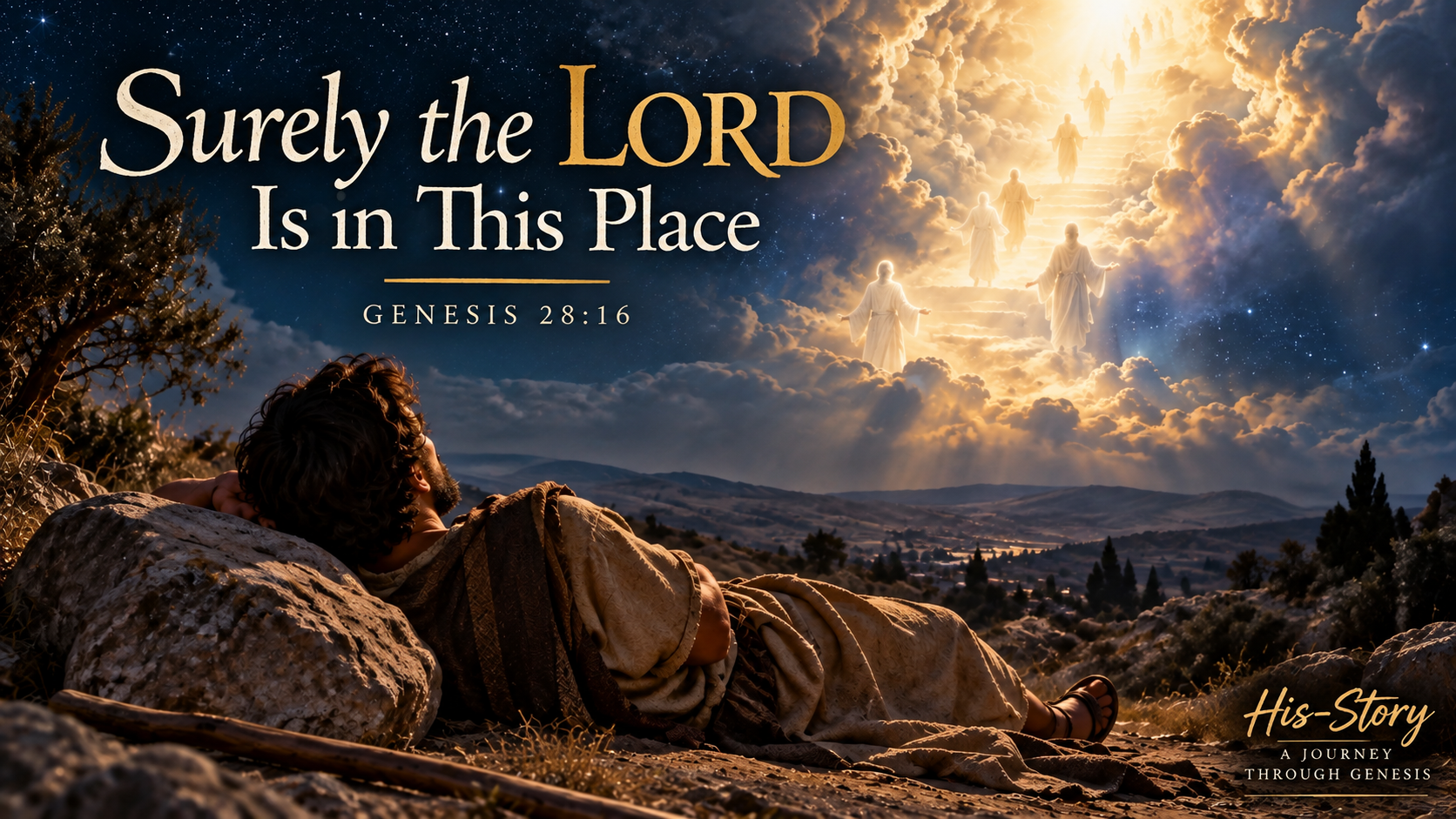
Surely the LORD Is in This Place

Surely the LORD Is in This Place

Surely the LORD Is in This Place

Before reading this week’s reflection, I encourage you to slowly read Genesis 27 and 28.

Abraham is gone. Isaac is growing old. And the promise God gave Abraham is about to pass into the hands of another generation.

But the family carrying that promise is fractured by favoritism, deception, anger, and fear. A son will lie to his father. A brother will threaten to kill his brother. A mother will send away the son she loves.

And somewhere in the middle of all that brokenness, the Father will come near.

As you read, keep asking the question we have been asking throughout His-Story:

What does this teach us about the Father?

Surely the LORD Is in This Place

Isaac was old, and his eyes had grown dim.

Believing his death might be near, he called Esau and asked his oldest son to hunt game and prepare the food he loved. Afterward, Isaac would give Esau his blessing.

Rebekah was listening.

Years earlier, before the twins were born, the LORD had told her:

“Two nations are in your womb… and the older shall serve the younger.”

Genesis 25:23

But rather than wait to see how the Father would fulfill what He had spoken, Rebekah made a plan of her own.

She prepared the food Isaac loved, dressed Jacob in Esau’s clothes, and covered his smooth hands and neck with goatskins. Jacob would pretend to be his brother and receive the blessing before Esau returned.

Jacob had entered the world grasping his brother’s heel.

He was still grasping.

When Jacob entered his father’s tent, Isaac was suspicious.

“Who are you, my son?”

“I am Esau your firstborn.”

Isaac wondered how he had returned from the hunt so quickly.

“Because the LORD your God granted me success.”

Genesis 27:20

The LORD your God.

Jacob knew the stories. He knew about the God who had called Abraham, given the promise, and miraculously given life to his own father.

But He was still your God.

And Jacob was using His name to tell a lie.

Isaac touched Jacob’s hands and smelled Esau’s clothes. Then he blessed him with the dew of heaven, the richness of the earth, grain and wine, and authority over nations and brothers.

Jacob had what he wanted.

Then Esau came home.

When the deception was discovered, Esau cried out with “an exceedingly great and bitter cry.”

“Bless me, even me also, O my father!”

Genesis 27:34

Whatever we may think of Esau for selling his birthright, Genesis lets us hear his pain.

Soon that pain became hatred.

“Esau hated Jacob.”

Genesis 27:41

Esau planned to kill his brother after Isaac died, so Rebekah sent Jacob away.

Before he left, Isaac called Jacob to himself once more.

This time there were no goatskins. No disguise. No lie.

Isaac knew exactly who stood before him.

“May he give the blessing of Abraham to you and to your offspring with you.”

Genesis 28:4

Jacob had schemed for dew and grain, wealth and authority.

But he had not stolen the blessing of Abraham.

Isaac gave it to him knowingly.

Then Jacob left.

Years later he would remember that journey with a single sentence:

“With only my staff I crossed this Jordan.”

Genesis 32:10

The man who had grasped for abundance walked away carrying a stick.

Eventually the sun went down.

Jacob stopped walking.

There was no mother whispering instructions. No father to fool. No brother to outmaneuver. No blessing left to grab.

Just Jacob.

His father had been deceived. His brother hated him. His mother had sent him away. And the last time Jacob had spoken the name of the LORD, he had called Him “the LORD your God” while telling a lie.

Jacob found a place to sleep, placed a stone near his head, and lay down on the ground.

Then he dreamed.

He saw a stairway reaching between earth and heaven, with angels of God ascending and descending.

And the LORD came near.

“I am the LORD, the God of Abraham your father and the God of Isaac.”

Genesis 28:13

Then came words Jacob must have recognized.

The land.

Descendants.

A family spreading across the earth.

All the families of the earth being blessed through them.

The promise given to Abraham was now being spoken to Jacob.

And then the Father said:

“Behold, I am with you and will keep you wherever you go… For I will not leave you until I have done what I have promised you.”

Genesis 28:15

God knew what Jacob had done.

Yet there was no condemnation in His words. No demand that Jacob first repair what he had broken.

The promise still stood.

And so did the Father.

Jacob’s deception was real, and its consequences would follow him for years. But his failure had not made the Father disappear.

The Father came to Jacob while Jacob was still Jacob.

There is something here that sounds remarkably like the Gospel. God did not come near because Jacob had finally made himself worthy of His presence. He came near while Jacob was still carrying the consequences of his own sin.

Much later, Paul would write:

“God was in Christ reconciling the world to Himself, not counting their trespasses against them.”

2 Corinthians 5:19

The Gospel did not introduce us to a different Father.

We have been watching Him from the beginning.

Jacob woke from his sleep.

“Surely the LORD is in this place, and I did not know it.”

Genesis 28:16

Perhaps there was something deeply personal in his astonishment.

I didn’t know He was here.

Here, on this road.

Here, in this mess.

Here, with me.

Jacob had gone to sleep knowing about the God of Abraham and Isaac.

He woke discovering that God was present with him.

Centuries later, Jesus would reach back to Jacob’s dream:

“You will see heaven opened, and the angels of God ascending and descending on the Son of Man.”

John 1:51

Jacob had seen a place where heaven and earth seemed to meet.

Jesus pointed to Himself.

The God who came near to Jacob would one day come nearer still.

Jacob stood the stone upright, poured oil upon it, and called the place Bethel—House of God.

Then he made a vow. If God would truly be with him, protect him, provide food and clothing, and bring him safely home:

“the LORD shall be my God.”

Genesis 28:21

There is something beautifully unfinished about those words.

Jacob had heard the stories.

Now he would find out for himself.

The Father had said, “I am with you.”

Jacob had years ahead of him to discover what that meant.

Bethel did not suddenly change Jacob into a different man.

But something had begun.

Jacob had risked almost everything for a blessing of abundance and walked away with a staff.

Yet lying on the ground with almost nothing in his hands, he received something he could never steal, manipulate, earn, or inherit from his father.

The Father gave Jacob Himself.

The God Jacob had called “the LORD your God” had come near and said:

“I am with you.”

And Jacob opened his eyes.

“Surely the LORD is in this place, and I did not know it.”