When God Shut the Door
When God Shut the Door
Genesis 6–7
Before reading this week’s reflection, I encourage you to slowly read Genesis 6 and 7.
Do not rush through the story looking for answers to every difficult question. Instead, read it with the same question we have been asking since Genesis 1:
What does this teach us about the Father?
Listen to this week’s reflection
When God Shut the Door
I have been dreading this story.
That may sound strange to say about Noah and the ark. For many of us, this was one of the first Bible stories we ever learned. We saw pictures of smiling animals walking two by two. We colored rainbows. We sang songs about arks and doves and dry ground.
But the actual story is not cute. It is not soft. It is not a children’s decoration for a nursery wall.
The story of Noah is one of the darkest stories in Genesis. And if we are honest, it is one of the hardest stories in Scripture.
For several weeks, we have been walking slowly through the opening chapters of Genesis, asking one central question:
What does this teach us about the Father?
We have seen a Father who created with beauty, order, generosity, and joy. We have seen a Father who placed humanity in a garden, not as servants trembling before a distant ruler, but as children invited into fellowship.
When Adam and Eve failed, the Father came looking.
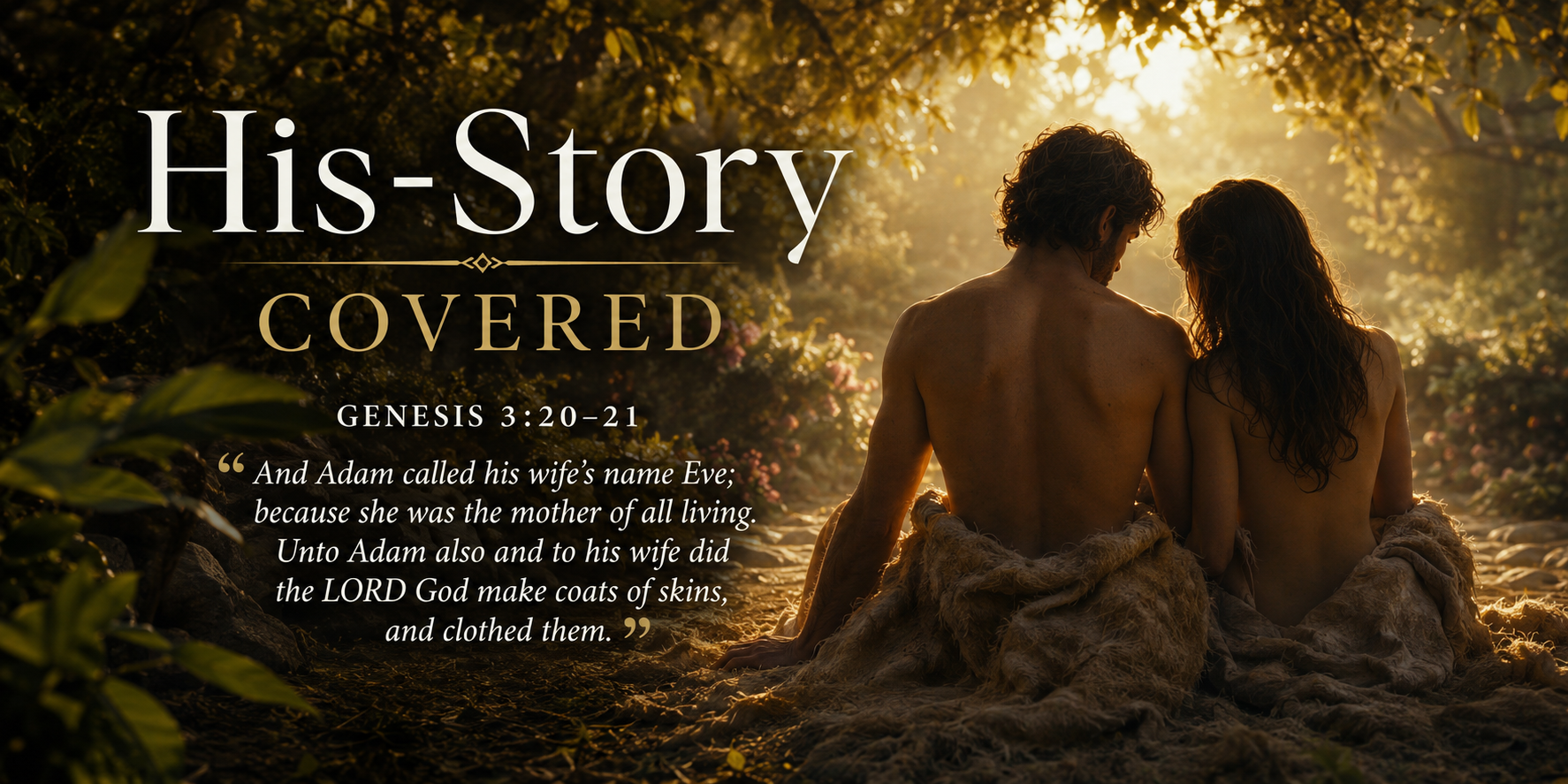
When shame entered the human story, the Father covered them.
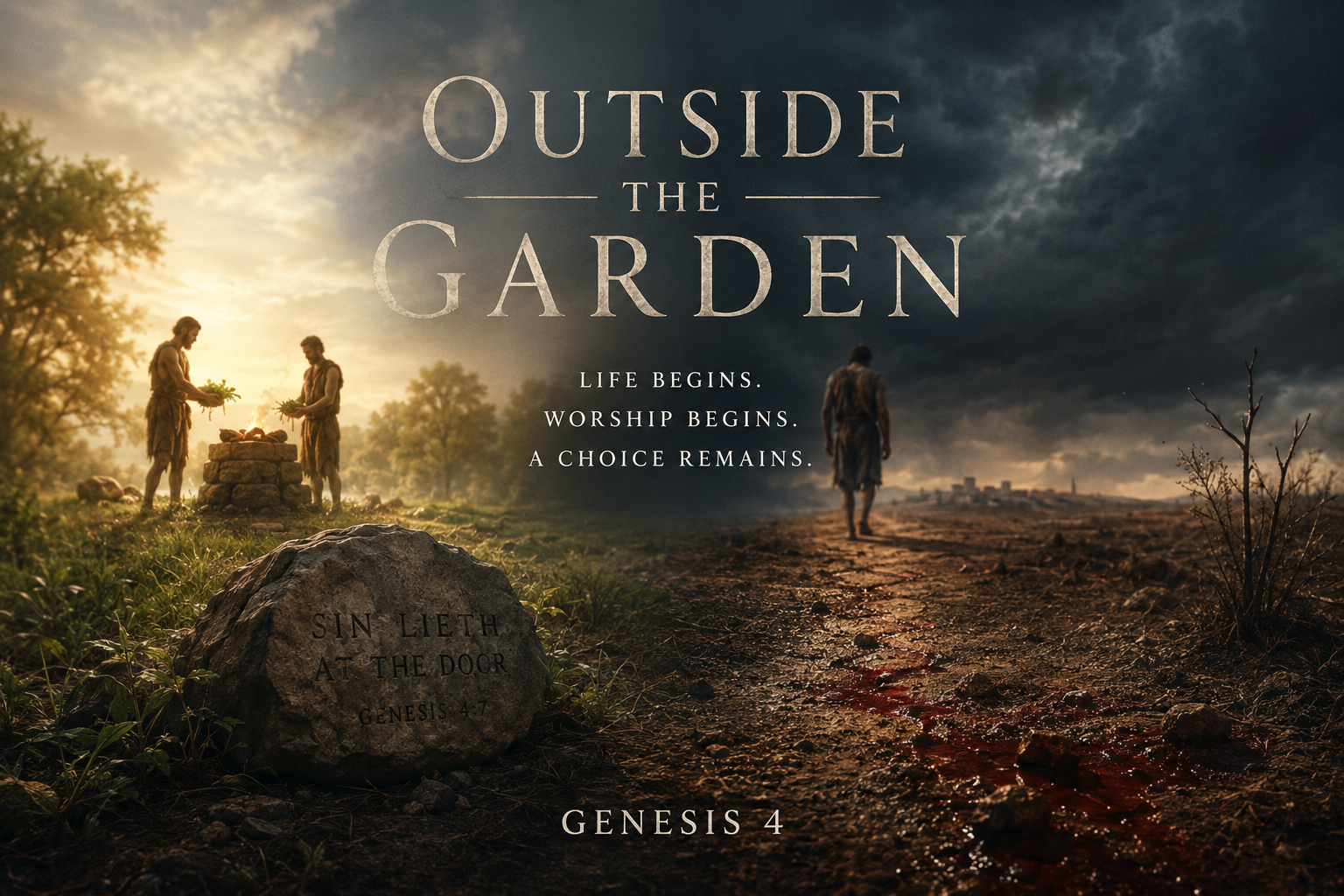
When Cain stood at the edge of violence, the Father warned him before the blood was spilled.
Even after Cain murdered his brother, the Father marked him with protection.
Again and again, the story has surprised us. Judgment was real. Sin mattered. Death entered. But mercy kept appearing. Invitation kept appearing. The Father kept moving toward His children.
Then we come to Genesis 6.
And suddenly, the story becomes much harder to read.
“The Lord saw that the wickedness of man was great in the earth, and that every intent of the thoughts of his heart was only evil continually.”
Every intent.
Only evil.
Continually.
Those words are almost impossible to comprehend.
We live in a fallen world. We know evil exists. We see cruelty, violence, greed, abuse, corruption, and hatred. Some days it feels overwhelming.
But even in our broken world, most of us still know people who are kind. Not perfect. Not necessarily godly. But decent. Loving mothers. Faithful fathers. Honest neighbors. Gentle children. People who laugh, work, help, grieve, forgive, and try again.
Genesis 6 describes something darker.
Not a world where evil existed, but a world where evil had become the atmosphere. A world where human imagination itself had become corrupted. A world where violence filled the earth. A world where the old stories were no longer being heard.
That may be the part that grieves me most.
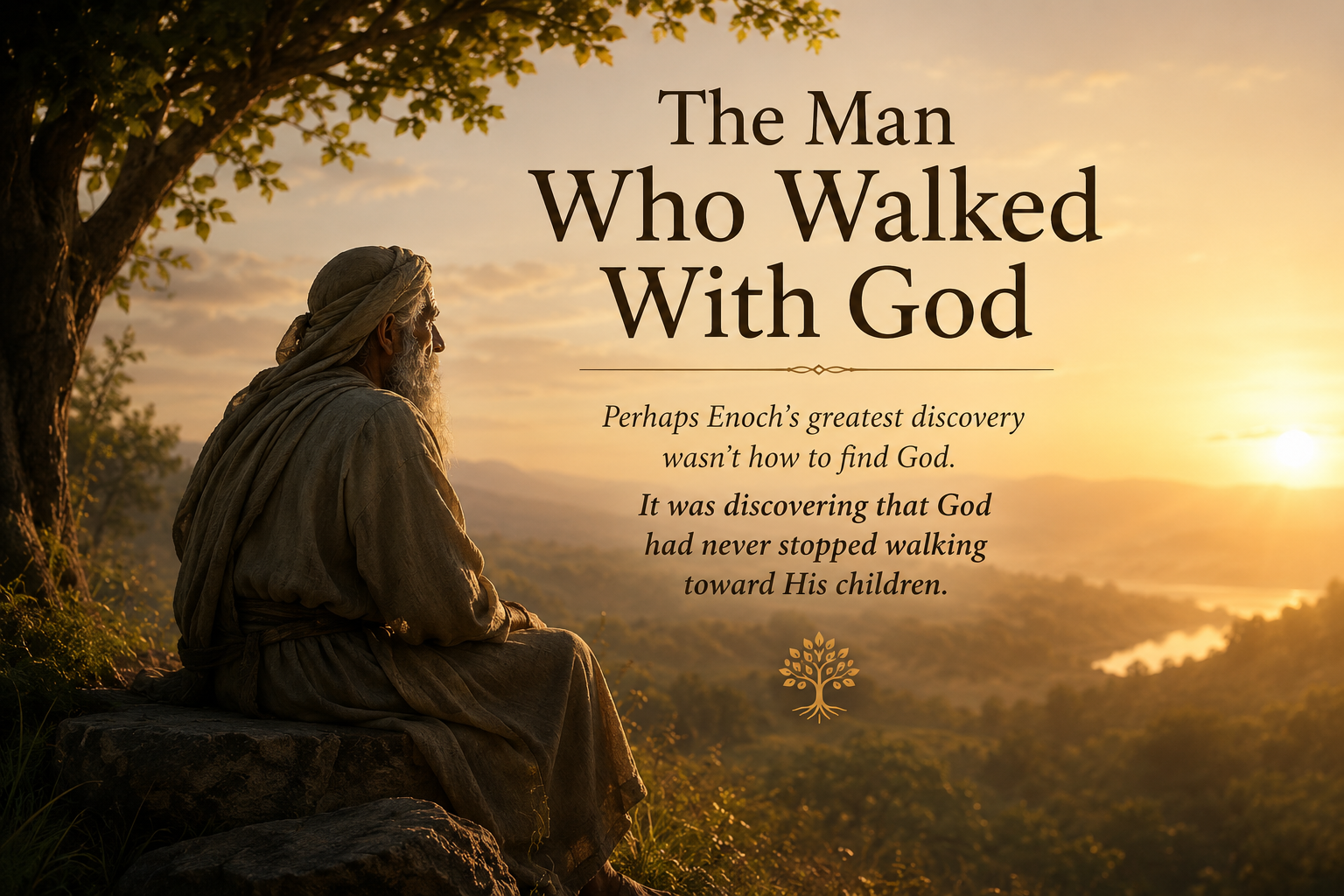
Because from the beginning, God desired relationship. He wanted His children to walk with Him. Adam had known His voice. Enoch had walked with Him. Noah would walk with Him. But somewhere along the way, much of humanity stopped listening.
One line remembered.
One line forgot.
One family kept telling the stories.
Another path slowly drifted into silence.
By the time Genesis 6 opens, the voices still carrying the old testimony appear to have become painfully few. The world had not merely become immoral. It had become unreachable.
Genesis 6 also introduces one of the most mysterious passages in Scripture. It speaks of the “sons of God,” the “daughters of men,” and the Nephilim. For thousands of years, Jewish rabbis, Christian scholars, and thoughtful believers have wrestled with exactly what those words mean. Were they fallen angels? Powerful rulers? The descendants of Seth and Cain? Giants? Something else entirely?
I honestly do not know.
And perhaps the humility to admit that is healthier than pretending certainty where Scripture has left room for wonder.
What I do know is this: whatever was happening in Noah’s day, Genesis repeats the same conclusion again and again. Violence filled the earth. Corruption spread everywhere. Humanity had reached a level of rebellion I do not think we can fully comprehend.
And then Scripture says something that should stop us in our tracks.
“The Lord was sorry that He had made man on the earth, and He was grieved in His heart.”
I do not fully understand those words.
I do not think any of us do.
When we hear that God was “sorry,” we may imagine regret the way humans experience it, as though God looked back and realized He had made a mistake. But that is not the picture Genesis has been giving us.
This does not read like the confession of a Creator who failed.
It reads like the sorrow of a Father whose children have destroyed themselves.
The grief is not evidence that God stopped loving. The grief is evidence that He loved deeply.
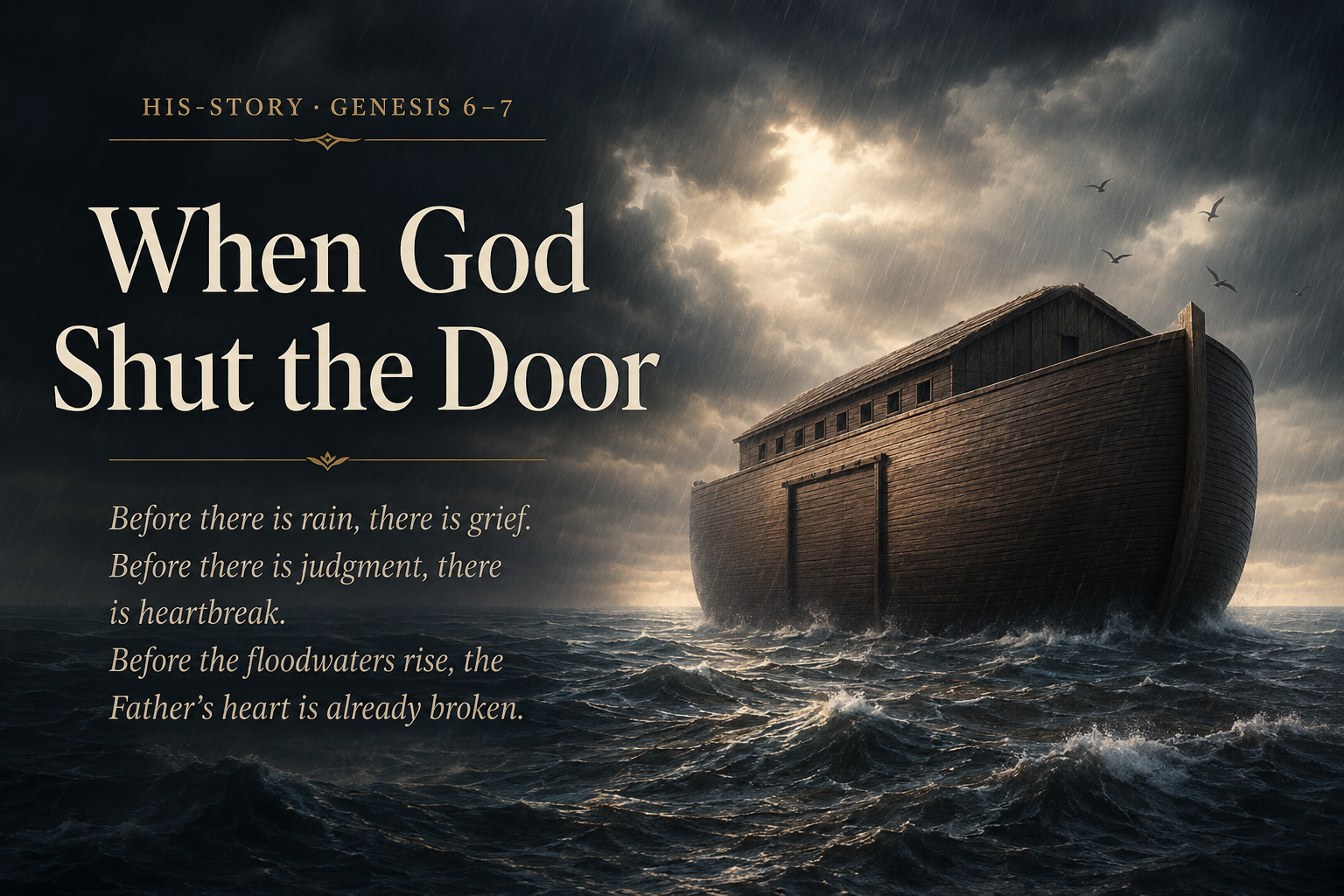
Before there is rain, there is grief.
Before there is judgment, there is heartbreak. Before the floodwaters rise, the Father’s heart is already broken.
That matters.
Because if we begin the flood story with wrath alone, we may miss the first thing Genesis wants us to see.
God loved His creation. But now, God was grieved.
Not annoyed. Not inconvenienced. Not detached.
Grieved to His heart.
The story of the flood does not begin with a monster eager to destroy. It begins with a Father looking at a world He made for life and seeing it filled with violence—intentional death.
And still, in the middle of that darkness, one sentence appears like a breath after drowning.
“But Noah found grace in the eyes of the Lord.”
Grace.
That word matters.
Genesis tells us Noah was a righteous man. It tells us he was blameless in his generation. It tells us Noah walked with God. Those things matter too. Noah was not indifferent. He was not faithless. He was not merely lucky.
He walked with God.
But still, the text says Noah found grace.
Not wages. Not entitlement. Not payment.
Grace.
Centuries later, Paul would write, “By grace you have been saved through faith.” Noah’s story quietly whispers that same truth. Even the most righteous man in his generation did not stand before God because he deserved to. He found grace.
Noah was not saved because he was the hero of the story. Noah was saved because the Father chose to preserve life. Even in judgment, mercy was still moving. Even as one world was ending, God was already preserving the seed of another.
But where did Noah’s faith come from?
I do not think Noah’s trust was born the day God told him to build an ark.
Genesis 5 looked, at first, like a genealogy. Names. Ages. Sons. Deaths. But perhaps it was much more than that. It was the passing of testimony.
Adam lived long enough for his story to be remembered by generations. Enoch walked with God in a world that had already lost Eden. Methuselah carried the memory of a world before the flood. Lamech named his son Noah with hope.
These were not merely names on a family tree. They were men who carried stories.
Stories of a garden. Stories of failure. Stories of mercy. Stories of covering. Stories of Cain. Stories of Enoch. Stories of a Father who still desired to walk with His children.
Noah did not invent faith in isolation. He inherited it. He received it through relationship, through memory, through testimony, through the slow work of generations who refused to let the stories die.
That is discipleship.
Not merely information passed from one mind to another, but stories carried from one heart to another.
Noah walked with God because somewhere along the way, he believed the invitation still existed.
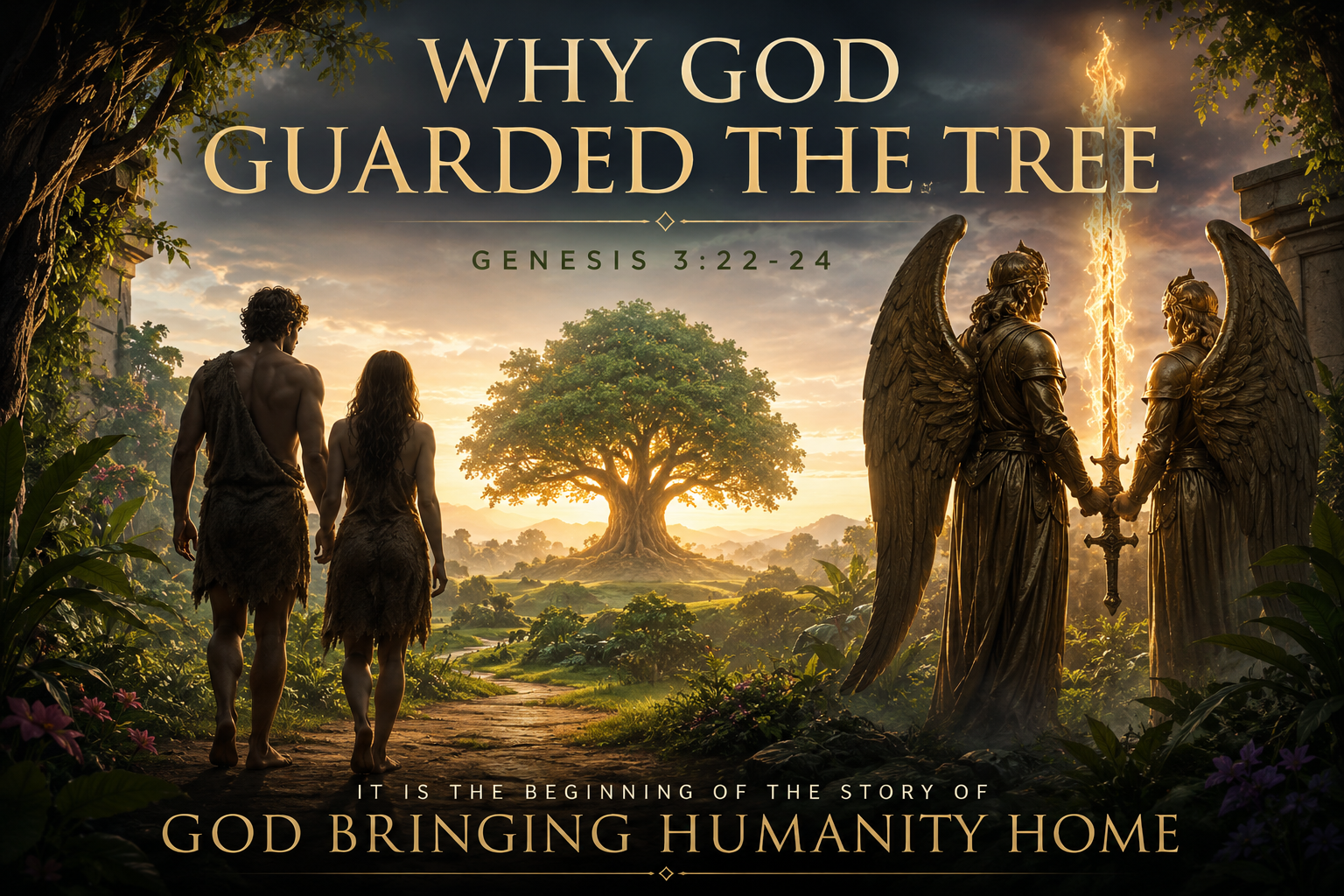
The Garden was closed.
But the Father was not gone.
That belief would soon be tested in a way few men have ever been tested.
God told Noah to build an ark. Not a ship. Not a vessel of exploration. Not something with sails and steering and a destination Noah could control.
An ark.
A great wooden refuge. A box, in one sense. A container. A place of preservation. A place of death and life at the same time.
Inside the ark, life would be preserved.
Outside the ark, life would perish.
There is something deeply unsettling about that.
Noah could build it. Noah could enter it. But Noah could not steer it. Once the door closed, he would not be in control.
And perhaps that is one of the clearest pictures of faith in the entire story.
Noah did not trust his ability to navigate the flood. He trusted the Father who had called him into the ark.
The flood did not teach Noah to trust the Father.
It revealed that he already trusted.
Then came the day.
The animals entered. Noah entered. His wife entered. His sons and their wives entered.
Eight souls inside the ark.
But Noah had lived six hundred years. We should not read that too quickly.
A man does not live six hundred years without relationships. He had known fathers and mothers, brothers and sisters, children, grandchildren, neighbors, workers, friends, enemies, acquaintances, families who lived nearby, children who had grown up around him, people who had laughed at his table, people who had heard his voice, people he had known by name.
Some extra-biblical traditions suggest Noah had other sons and daughters. Scripture does not tell us that, so we should hold that carefully. But we do not need tradition to know this much:
Noah loved people outside the ark.
That is beyond question.
And then Scripture says one of the most painful and powerful sentences in the whole account.
“The Lord shut him in.”
GENESIS 7:16
God shut the door.
I do not want to build too much doctrine on a single detail, but I cannot pass over it quickly.
Noah built the ark. Noah obeyed. Noah gathered. Noah entered.
But God shut the door.
Perhaps that was mercy.
Perhaps there are some doors too heavy for a man to close. Perhaps there are some burdens God does not ask His servants to carry.
I do not know.
But I know this: I would not have asked Noah to shut that door.
And Genesis does not say God asked him to.
God shut the door.
Then came the waiting.
Seven days.
The door was closed, but the rain had not yet begun.
Imagine that silence inside the ark. No open sky. No normal life. No steering. No escape. No going back. Just waiting.
Did Noah hear voices outside? Did he hear questions? Mockery? Panic? Did people come near the ark once they realized the door would not open?
We are not told.
And because Scripture is silent, we must be careful.
But silence does not remove the emotional weight.
Noah was human. He was not made of stone. Faith does not erase grief. Trust does not make a man numb.
When the rain finally began to fall, Noah knew what it meant. When the fountains of the deep broke open, Noah knew what was happening. When the ark lifted from the ground, Noah knew the world beneath him was dying.
How does a man carry that?
How does faith survive the sound of judgment?
Did Noah stand strong the entire time? Or did he fall on his face in the bottom of that ark and weep? Did he ever ask, “Father, are You still good?” Did the stories carry him? Did Adam’s testimony come back to him? Did he remember Enoch? Did his own years of walking with God become the only thing strong enough to hold him together?
We do not know.
But I think we are allowed to wonder.
Not to accuse Noah. Not to accuse God. But to recognize the terror of the moment.
The ark was not a peaceful cruise through a rainstorm. It was a coffin for one world and a womb for another.
Death was everywhere.
Life was hidden inside.
That pattern should sound familiar.
In the beginning, the earth was without form and void, and darkness was over the face of the deep. The Spirit of God hovered over the waters. Out of darkness, God brought life.
Now, in Noah’s day, the waters covered the earth again. Darkness. Chaos. Death.
But hidden in the ark was life.
Not visible yet. Not flourishing yet. Not singing under a rainbow yet. But preserved. Held. Carried.
God often brings life through places that feel like death.
We see it again and again in Scripture. Israel trapped between the sea and Pharaoh’s army. Jonah in the belly of the great fish. Daniel in the lions’ den. Jesus in the tomb.
Darkness first.
Silence first.
Then life.
But in this part of Noah’s story, we are not at the dove yet. We are not at the olive leaf. We are not at the mountain. We are not at the rainbow.
Not yet.
For now, the door is shut. The rain is falling. The deep is breaking open. The ark is rising. And Noah cannot steer.
All he can do is trust the Father whose voice he has learned to know.
That may be where this story reaches us most honestly.
Because there are seasons when faith does not feel like sunlight. Sometimes faith feels like sitting in the dark, inside a door we did not shut, carried by waters we cannot control, trusting a God whose ways we cannot fully understand. Sometimes even in faith we find ourselves on our face, hearing the screams of loved ones, and having to leave those tears with God, often without answers.
I do not say that lightly.
There are parts of this story that still trouble me. The flood is horrifying. The loss is beyond imagination. The questions are real.
I do not want to rush past them. I do not want to pretend that mothers and fathers, sons and daughters, children and neighbors were not swept away. I do not want to make judgment feel easy.
It is not easy.
It should not be easy.
But I also cannot forget what Genesis has already shown us.
The Father I have come to know through these opening chapters of Genesis has not changed. He is still the One who walked into the Garden looking for Adam. The One who covered shame. The One who warned Cain before the blood was spilled. The One who welcomed Enoch into fellowship beyond Eden. The One whose heart was grieved before the rain ever fell.
So I will not pretend I understand everything. But I will keep asking the question.
What does this teach us about the Father?
Perhaps it teaches us that evil grieves Him more deeply than we imagine. Perhaps it teaches us that judgment is never casual in the heart of God. Perhaps it teaches us that mercy may sometimes look like a closed door when destruction is rising outside. Perhaps it teaches us that faith must be formed before the storm comes.
Noah’s faith was not built by the flood.
It was revealed by the flood.
His faith had been formed around campfires, through stories, through generations of men who remembered that the Father still desired to walk with His children. And when the darkest day came, Noah stepped into the ark.
Not because he understood everything. Not because the coming storm made sense. Not because he could control where the waters would take him.
He entered because he trusted the One who called him.
Perhaps that is why Jesus could one day say, “Follow Me,” even to frightened, confused disciples who understood far less than they imagined. The invitation had never changed. Trust the Father. Walk with Him. Let Him lead you through storms you cannot yet understand.
For now, that is where we leave Noah. Inside the ark. Inside the darkness. Inside the grief. Inside the mystery.
But not alone.
The storm has begun. The light has not yet returned. The rainbow has not yet appeared.
But the Father is still there.
Noah did not understand the flood any more than we do.
He simply knew the Father better than he understood the storm.
Perhaps that is where faith begins for us as well.
If these reflections have encouraged your walk with the Father, I would love to hear from you. Feel free to share this article or leave a comment below.
A Song for This Reflection
My son Ryan wrote a song that beautifully echoes the heart of this week’s reflection. If this article spoke to you, I encourage you to take a few more minutes and listen.